City Guide
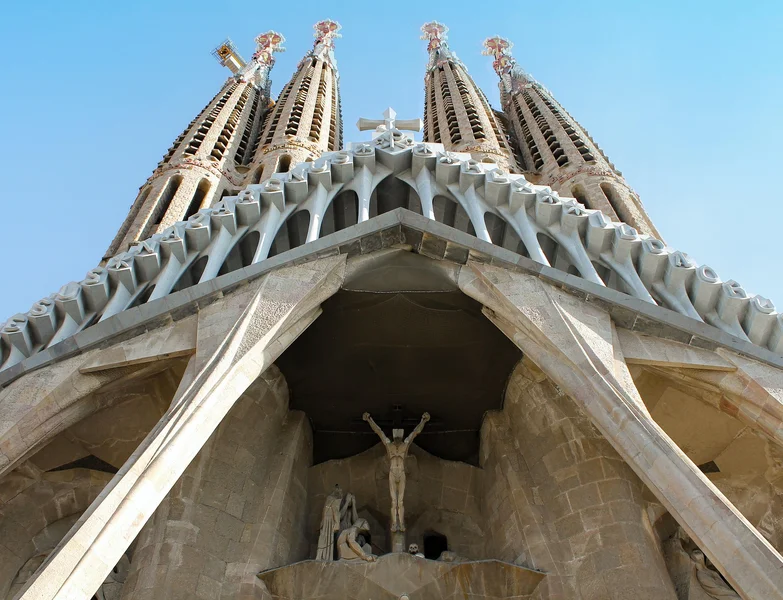
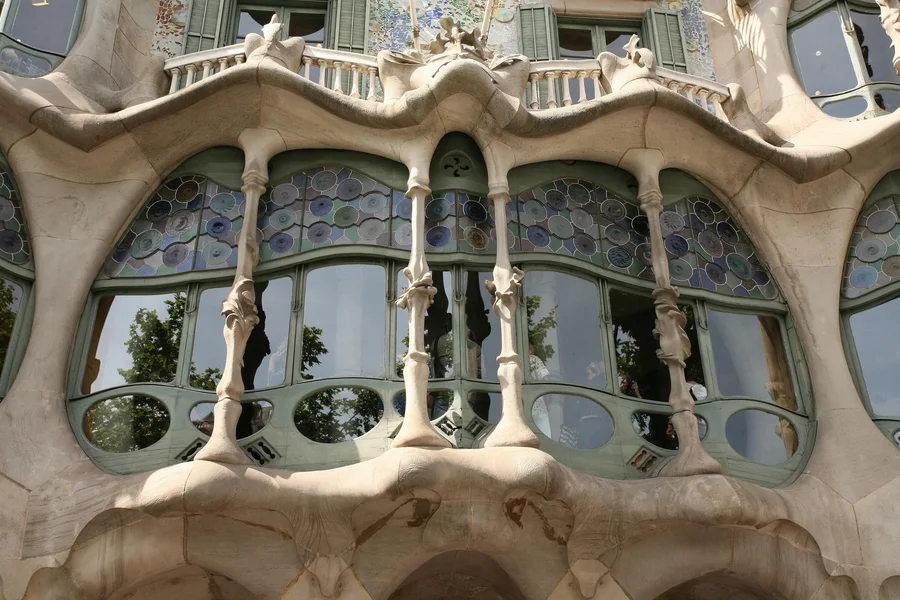
Barcelona is a masterpiece of Catalan Modernism, where the avant-garde meets the ancient Mediterranean. From the sun-drenched beaches to the whimsical spires of the Sagrada Família, the city is a feast for the senses.
Getting Around
Barcelona has an excellent, air-conditioned Metro system that is the fastest way to get around. It is supplemented by a vast bus network and the FGC (urban trains). The city is very walkable, especially in the Gothic and Eixample districts. For airport and port connections, see the transit guide.
Public Transit
Key Metro lines for visitors:
- L1 (red): Plaça de Catalunya and Hospital de Bellvitge
- L3 (green): Passeig de Gràcia, Barceloneta, Paral·lel
- L4 (yellow): Barceloneta beach
- L5 (blue): Sagrada Família, Diagonal
A single ride (Bitllet senzill) costs €2.90. The T-Casual card (10 trips, €13.00) is the best value for a short stay and works across Metro, bus, FGC zone 1, and tram. Buy at station ticket machines or via the TMB app.
The Hola Barcelona Travel Card gives unlimited journeys for 24, 48, 72, 96, or 120 hours and includes Metro trips to and from the airport. Purchase online for a 10% discount and exchange the voucher at any station machine.
The Barcelona Metro supports contactless card and phone payment at all validators. Tap your card or phone at each boarding - no transit card required for occasional trips.
Use the TMB App to manage tickets and check Metro/bus times. Use the Rodalies de Catalunya app to check real-time platform numbers and delay alerts for commuter trains.
NOTE: The TMB App allows digital ticket top-ups. However, some “personalised” digital tickets require ID verification taking up to 48 hours. For a first visit, buy a physical T-Casual at any station machine to avoid the wait.
Taxi & Rideshare
Official taxis in Barcelona are black and yellow. Use an app to avoid unlicensed drivers who quote inflated flat rates near tourist sites and transport hubs.
Use Freenow for official licensed taxis at metered rates. Use Uber for fixed-price rides with upfront pricing - useful when you want a cost estimate before boarding.
Walking & Cycling
Barcelona’s historic core is compact and walkable. The Gothic Quarter, El Born, and Eixample are all reachable on foot from each other. Sagrada Família is about 25 minutes on foot from Plaça de Catalunya.
The city has an extensive bike lane network. Bicing, the municipal bike-share, is for registered residents only and is not open to visitors. Tourist bike rentals are available from independent operators - expect around €15-20 for a full day.
The T4 and T5 tram lines run along the waterfront and Diagonal. If you are cycling near the tracks, take care not to catch a wheel in the rail groove - a common cause of cycling accidents in the city.
Where to Stay
Gràcia is the best base for most visitors: a village-within-the-city atmosphere, charming squares, and local workshops, with good Metro access and a calmer feel than the tourist-heavy center.
For a more central option, Eixample offers wide, modern pavements, excellent transport links, and a noticeably quieter atmosphere than Las Ramblas. If you want to be near the water, Barceloneta puts you steps from the sea and the best seafood restaurants.
The Gothic Quarter and Las Ramblas are the most popular areas, but they can be incredibly loud late into the night. If you are a light sleeper, Eixample is centrally located but features wider streets and a more relaxed, upscale atmosphere.
Ad: As a Booking.com partner, we may earn a commission from your booking.
Things to Do
Gaudí’s Modernist Wonders
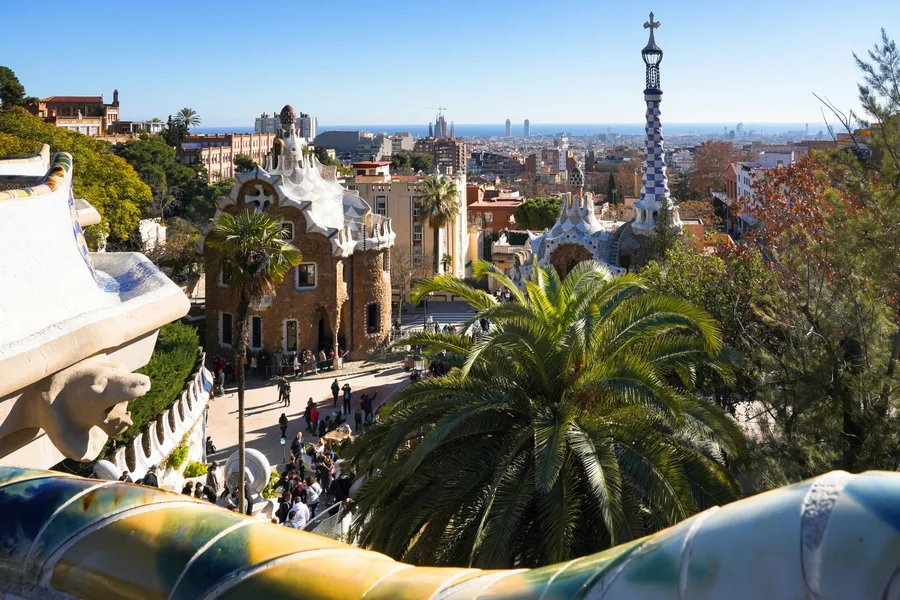
No visit is complete without Sagrada Família and Park Güell. Both require timed-entry tickets purchased in advance - Sagrada Família has no walk-up tickets at any price, and Park Güell slots fill weeks ahead in summer. See the Book Ahead section below for current lead times and official booking links.
Park Güell sits on a hill with a landscape of colorful mosaics, gingerbread-style houses, and panoramic views. The ticketed monumental zone covers about 15% of the park; the surrounding terraces are free to enter.
Park Güell involves significant uphill walking. For those with limited mobility, take a taxi to the Carretera del Carmel entrance - it is at a higher elevation and provides a much flatter path into the monumental zone.
Tapas and Markets

Explore the Mercat de Sant Josep de la Boqueria for local flavors, then head to the narrow alleys of the El Born district for an evening of tapas and local vermouth. El Born has the highest concentration of independently owned bars in the city.
The best tapas bars near Las Ramblas and La Boqueria tend to have inflated tourist pricing. The only reliable red flag is a staff member standing outside and verbally trying to pull people in. A Google Maps rating of 4.1 or above with 100+ reviews is a dependable on-the-spot filter.
Beaches and Waterfront

Barceloneta is the main beach - clean, free, and a 10-minute Metro ride from the center (L4, Barceloneta station). It is crowded in July and August. For a quieter alternative, walk 20 minutes north along the beachfront to Bogatell or Mar Bella, which are significantly less tourist-dense.
The waterfront promenade from the bottom of Las Ramblas to the Olympic Port is a pleasant 2 km walk, taking in the Columbus monument, the old harbor, and the sail-shaped Arts hotel.
Ad: As a GetYourGuide partner, we may earn a commission from your booking.
Book Ahead
Lead times vary significantly by season. The table shows how far ahead to book based on your travel date — peak season attracts much larger crowds and tickets sell out weeks earlier.
Peak and Off-peak season times:
July and August are the busiest months; Easter week spikes demand regardless of season.

Timed entry mandatory; no walk-up tickets at any time. Temporarily closed for restoration work until 29 May 2026.
30-minute timed entry windows capped at 1,400 visitors per hour. Free areas of the park need no ticket.

Online tickets save up to €15 per person vs. door price. Morning slots (10:00-13:00) fill fastest in summer.

Free Thursday evenings (after 17:00) fill just as fast as paid slots during peak season.

Guided tours (€24) sell out faster than self-guided (€20). Morning slots fill first.

Online tickets €18.50 vs €20.50 at the door. Sells out 1-2 weeks ahead in peak summer.

Rooftop access included in the standard ticket. Night Experience slots sell out faster than daytime.
Timed Black Madonna entry fills in peak months; walk-up is possible in low season. The €47 Mountain Card covers return train, rack railway or cable car, Black Madonna entry, and museum access.
Day Trips
Barcelona sits within easy reach of two UNESCO sites and several high-demand destinations reachable by train in under 90 minutes.
Montserrat

A dramatic serrated-rock mountain monastery complex 60 km northwest of Barcelona - the most popular day trip from the city by a wide margin.
Getting there: Take FGC line R5 from Barcelona Plaça Espanya to Monistrol de Montserrat (around 60 min), then connect to the rack railway or cable car to the monastery (15 min). The combined Montserrat Mountain Card (€47) covers the train both ways, the rack railway or cable car, timed entry to the Black Madonna, and museum access.
Booking: See the Book Ahead section for lead times and the official booking link.
Duration: Allow 4-5 hours on the mountain.
The Escolania (boys choir) performs daily at 13:00 Monday to Friday and Sunday, and at 18:45 Monday to Thursday when in residence. They do not perform during school holidays (July to mid-August). Check the monastery calendar before booking if the choir performance is the main draw.
Figueres - Dalí Theatre-Museum
The most visited museum in Spain outside Madrid - a surrealist building that is itself part of the exhibit, designed and overseen by Salvador Dalí until his death.
Getting there: Renfe regional train from Barcelona Sants or Passeig de Gràcia to Figueres (around 1h 40 min, from ~€9.50 one-way). Faster AVANT/AVE trains to Figueres-Vilafant take ~55 min from ~€18.
Booking: See the Book Ahead section for lead times and the official booking link.
Duration: Allow 2-3 hours inside.
Dalí Theatre-Museum - TicketsGirona

One of the best-preserved medieval cities in Europe. The cathedral, city walls, and Jewish Quarter (El Call) are walkable from the station. Girona doubled as several Game of Thrones locations.
Getting there: Renfe AVANT or regional train from Barcelona Sants - around 37 min by high-speed (€18 one-way) or 58 min by regional (€7.30). Book in advance via Renfe for the best fares.
Booking: No advance booking needed for the city itself. The cathedral and El Call are walk-up entry.
Duration: A comfortable 5-6 hours on-site.
Money & Shops
Cards & Cash
Barcelona is effectively cashless in 2026. Cards are accepted nearly everywhere, including most small bakeries and market stalls. A few traditional Granjas (old-style milk bars) and small street food vendors maintain a minimum card spend of around €5.
For groceries, Mercadona, Carrefour, and Lidl are 100% card-friendly and the most affordable chains.
When paying at terminals, always choose to pay in Euros (EUR) rather than your home currency. Choosing your home currency triggers “Dynamic Currency Conversion,” which applies a significantly worse exchange rate than your bank charges.
A common surprise is the hotel Tourist Tax (taxa turística). It is billed separately at checkout, is not included in most online booking prices, and must be paid per person per night.
ATMs
Avoid standalone Euronet ATMs in tourist areas - they charge a flat fee of around €5 per withdrawal on top of any bank charges. Use ATMs attached to a bank branch: CaixaBank, BBVA, and Santander are the most common. If your bank is part of the Global ATM Alliance, Deutsche Bank branches offer fee-free withdrawals.
Shopping Hours
Most shops and supermarkets are closed on Sundays. If you are caught short, the Maremagnum mall at Port Vell is one of the few retailers in the city permitted to open 365 days a year. Large El Corte Inglés stores also open on most Sundays in the city center.
Pit Stops
Restrooms
Clean public restrooms are hard to find on the street. The best free options are the top floor of El Corte Inglés in Plaça de Catalunya and the Arenas de Barcelona mall at Plaça d’Espanya. Most cafes will allow toilet use if you buy a coffee - a café solo costs €1.50-2.00.
Water
The tap water in Barcelona is perfectly safe to drink, though it has a distinct mineral taste from the local water table. There are hundreds of free public drinking fountains (Fonts) throughout the city.
Use the Fonts BCN app to locate the nearest public drinking fountain. There are over 1,600 across the city - enough to stay hydrated without buying bottled water.
Local Ways
Dining Hours
Locals eat late. Lunch is typically between 14:00 and 16:00, and dinner rarely starts before 21:00. Restaurants before 20:30 are almost exclusively filled with tourists and often have a shorter, higher-margin menu.
Use TheFork (known locally as ElTenedor) to book tables and access discounts of up to 50% off at participating restaurants, especially at midweek and early dinner slots.
Restaurant Tips
The only reliable red flag for a tourist-trap restaurant is a staff member standing outside on the pavement actively trying to pull people in. Laminated menus, food photos, and menus in multiple languages are not reliable indicators on their own - many well-rated local restaurants use them. As a quick on-the-spot check, Google Maps 4.4+ with several hundred reviews is a dependable filter.
TheFork offers up to 50% off the food menu at normal dinner hours in Barcelona. The discount is shown on the listing and applied automatically at checkout. Download the app before you arrive.
Tipping & Etiquette
Tipping is not mandatory in Barcelona. The local standard is to round up the bill or leave 5% for good service at a sit-down restaurant. At cafes, rounding up the change is appreciated but not expected. Taxi drivers do not expect a tip, though rounding up is common.
A major cultural note: while everyone in Barcelona speaks Spanish, the local language is Catalan. Using a simple “Bon dia” (Good morning) or “Merces” (Thank you) is genuinely appreciated by locals.
Health & Help
Pharmacies
A Farmàcia is identified by a glowing green cross. For toiletries like shampoo or toothpaste, go to a supermarket or drogueria - pharmacies charge a premium for non-medical goods.
Most pharmacies are open Monday to Saturday, roughly 09:00-21:00. After hours, each district rotates a duty pharmacy (farmàcia de guàrdia). Farmàcia Torres (Carrer d’Aribau, 62, Eixample) is a well-known permanent 24-hour pharmacy, open every day of the year.
Hospitals
The most common visitor health issue is dehydration and heatstroke in the humid summer months.
Public: Hospital Clínic de Barcelona (Carrer de Villarroel, 170) - Metro Line 5, Hospital Clínic station. The main central public hospital. EHIC/GHIC cards from the EU and UK are accepted here.
Private: Hospital Quirónsalud Barcelona (Plaza Alfonso Comín, 5) - English-speaking staff, 24-hour emergency department, and dedicated international patient support.
For minor ailments, a local CAP (Centre d’Atenció Primària) is much faster and cheaper than a major hospital emergency room.
- 112 - universal emergency number (police, fire, ambulance). English-speaking operators available.
- 061 - medical emergencies only.
Safety & Accessibility
The US State Department rates Spain at Level 2 (“Exercise increased caution”) due to terrorism risks and petty crime. Barcelona is safe for the vast majority of visitors, but pickpocketing is systematic and professional.
Safety Risks
- Pickpockets: The highest-risk spots are Las Ramblas, the Gothic Quarter, Barceloneta beach, and the L3 Metro line (green). Keep bags in front of you, never put phones or wallets in back pockets, and never hang your bag on the back of a chair.
- Phone snatching: Thieves on scooters snatch phones from people using them on the street. Stay away from the road edge if you need to use your phone while walking.
- Unofficial taxis: Avoid drivers offering rides outside the airport, Sants station, or cruise port. Only use officially marked taxis (black and yellow) or book via app.
Accessibility
The Gothic Quarter has uneven cobblestones and narrow alleys - difficult with a wheelchair or pushchair. The Eixample district has much wider, flatter pavements and is significantly more accessible.
Barcelona Metro stations opened after 1995 have elevators, but many older stations on Lines 1 and 3 do not. Check the TMB accessibility page for current elevator outages before your journey.
The Barcelona Access website provides English-language accessibility maps for wheelchair routes, museum access, and adapted beach facilities.
Useful English Resources:
- Barcelona Access: Official guide for visitors with disabilities, covering transport, museums, and beaches.
- TMB Accessibility: Real-time info on which Metro station elevators are currently out of service.