City Guide
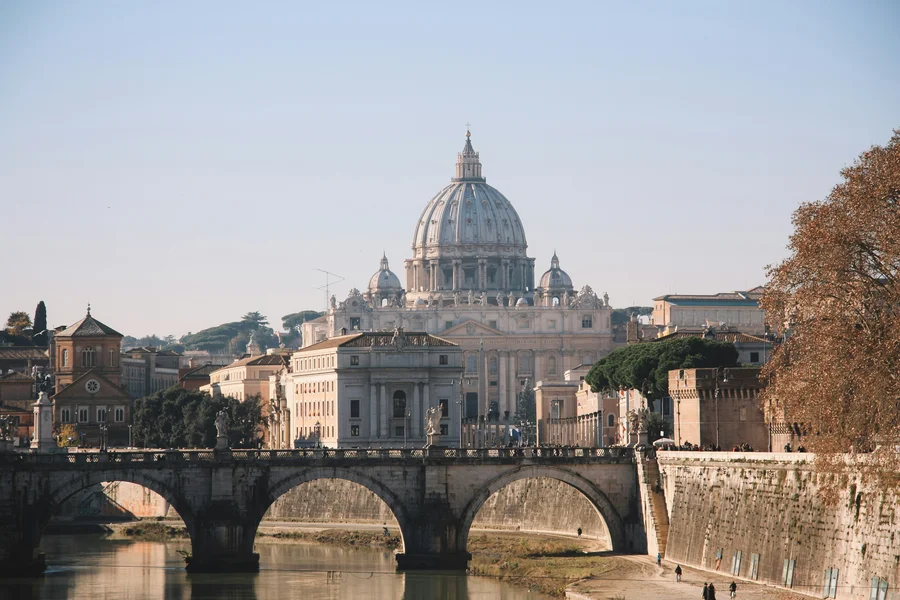
Rome, the “Eternal City,” is a massive open-air museum where ancient ruins, Baroque fountains, and vibrant street life coexist in a beautiful, chaotic harmony. From the grandeur of the Colosseum to the spiritual center of the Vatican, Rome is a city that demands multiple visits.
Getting Around
Rome’s ATAC public transport network — Metro Lines A, B, and C, plus buses and trams — connects every major attraction. For airport connections to Fiumicino and Ciampino, see the transit guide.
Public Transit
Key tourist lines:
- Metro Line A: Spanish Steps (Spagna), Trevi Fountain area (Barberini), Vatican (Ottaviano)
- Metro Line B: Colosseum (Colosseo), Termini interchange
- Metro Line C: San Giovanni, connects to Line A at San Giovanni
A single-ride BIT ticket (100 minutes, one Metro entry plus unlimited buses and trams) costs €1.50. Tourist passes: 24h €8.50 / 48h €15.00 / 72h €22.00. Buy at station vending machines, Tabacchi, or via app.
Rome’s Metro and buses support contactless Tap & Go — just tap your card or phone at every boarding. Once your daily spending reaches €8.50, any further taps that day are free until midnight. No paper ticket needed.
Use Citymapper for the most intuitive real-time navigation and precise station exit details.
MooneyGo is the essential choice for purchasing and validating digital transit tickets and parking in Rome.
Taxi & Rideshare
Licensed taxis in Rome are white and metered. Use a ride-hailing app to avoid unlicensed drivers who quote inflated flat fares at tourist sites and airports.
Use FreeNow or itTaxi for the fastest city rides — official taxis are authorized to use dedicated bus lanes, bypassing Rome’s heavy traffic.
Select Uber for premium reliability or a seamless transfer at Fiumicino Airport, where it is the official partner with dedicated priority pickup zones.
Walking & Cycling
Rome’s historic center is compact: the Colosseum, Piazza Navona, and the Vatican are all within 30–40 minutes of each other on foot. The Sampietrini cobblestones are uneven, however, and there is no city-wide bike-share scheme comparable to other European capitals.
The Sampietrini cobblestones of Rome are beautiful but brutal on your feet. Leave the heels at home and wear sturdy, comfortable walking shoes. Your ankles will thank you.
Where to Stay
Trastevere is the first choice: a village-within-the-city with medieval lanes, terracotta facades, and the densest concentration of good trattorias in Rome. It is walkable to the Colosseum and the Vatican, and stays lively into the late evening without feeling as hectic as the historic center.
For elegance closer to the main sights, the streets around Piazza Navona and the Pantheon put you 10 minutes from nearly everything. Expect to pay a premium for the location.
For a more local feel, Monti - Rome’s oldest rione and now its most fashionable - has independent cafés, vintage clothing, and quieter streets, while sitting just east of the Roman Forum.
The area around Roma Termini is very convenient for transport and often has cheaper hotels, but it can feel a bit gritty at night. For a more “Roman” experience, aim for the side streets of Monti, which is just a short walk away.
Ad: As a Booking.com partner, we may earn a commission from your booking.
Things to Do
Most Rome attractions require online booking. If your card is declined at checkout, it is usually a 3D Secure step your bank has not activated - not a problem with the booking site. See the Travel Essentials guide for how to fix this before you travel.
Ancient Rome

Walk through the Colosseum, the Roman Forum, and the Palatine Hill. One ticket covers all three sites. It is the heart of the ancient empire and gives a staggering sense of scale — the Palatine Hill alone takes an hour to walk properly. Booking details are in the Book Ahead section below.
Fountains and Squares
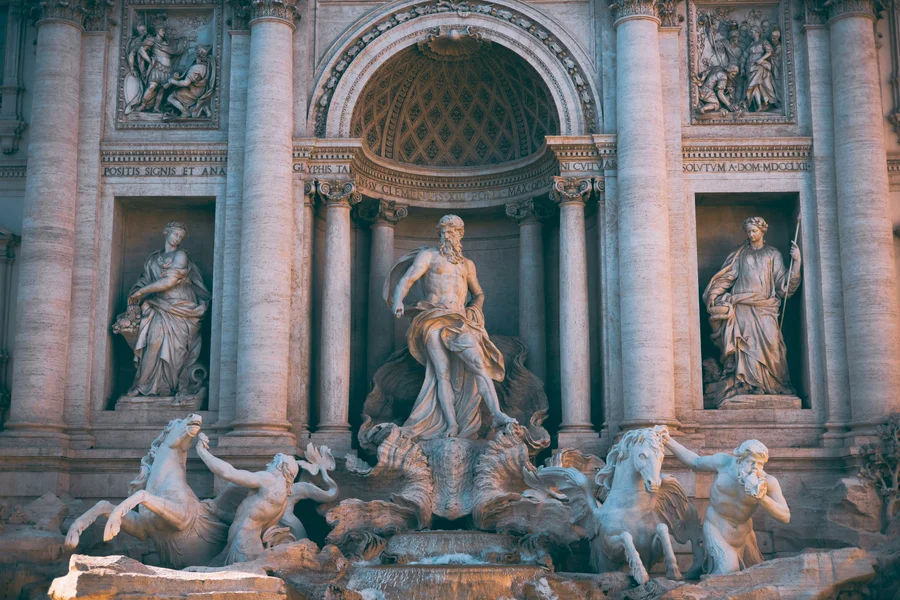
Wander from the Spanish Steps to the Trevi Fountain (don’t forget to throw a coin!), and then to the magnificent Pantheon, the best-preserved ancient Roman building in the world.
The Trevi Fountain is incredibly crowded during the day. Visit after midnight or before 7:00 AM to experience its beauty in relative peace. The lighting at night makes it even more dramatic.
The Vatican

St. Peter’s Basilica and St. Peter’s Square are free to enter and open daily — no ticket or advance booking required. The Vatican Museums and the Sistine Chapel are among the most visited museum complexes in the world; walk-up entry is not realistic in peak season. Booking lead times and the official ticketing URL are in the Book Ahead section below.
Castel Sant’Angelo — Hadrian’s Mausoleum converted into a papal fortress and now a national museum — is a five-minute walk from St. Peter’s Square and offers panoramic rooftop views over the Tiber.
Borghese Gallery

The Borghese Gallery holds one of the finest collections of Baroque sculpture in the world — Bernini’s Apollo and Daphne and The Rape of Proserpina are here. Entry is strictly timed and capped; this is one of the few Rome attractions where walk-up entry is not available at any price. Booking details are in the Book Ahead section below.
Ad: As a GetYourGuide partner, we may earn a commission from your booking.
Book Ahead
Lead times vary significantly by season. The table shows how far ahead to book based on your travel date — peak season attracts much larger crowds and tickets sell out weeks earlier.
Peak and Off-peak season times:
The Colosseum and Vatican Museums are the two most visited sites in Italy. Book both as early as possible — do not wait until you arrive.
Tickets are nominative — your name must match your photo ID at entry. Standard adult €20 + €5 online booking fee. St. Peter's Basilica is free with no booking required.
Entry capped at 360 people per 2-hour session — walk-up tickets are not available. Closed Mondays. A mandatory €2 reservation fee applies on top of admission.
Tickets are nominative and daily entries are capped at 20,000 in peak season. Site admission €20. Herculaneum (entry €16) is a less-crowded alternative and follows the same booking principle.

One ticket covers all three sites. Underground and Arena Floor add-ons sell out faster — book those first if you want them.

Guided tour only. Open Fridays, Saturdays, and Sundays only; Max 25 people per group; last admission 3:45pm; tour lasts about 1hr 20min. €18 adult, which includes a virtual reality experience.

Ground floor basilica is free to enter without booking. The underground excavations — 4th-century lower basilica, 1st-century Roman houses, and the Mithraeum — require a pre-booked timed-entry ticket.

Guided tour only. €10 adult; Closed Mondays, Christmas period (Dec 24-26), New Year, Epiphany, and maintenance closures in January and August. Contains the oldest known depiction of the Virgin and Child (early 3rd century).

Open Friday mornings (guided tours, reservation mandatory, €35 adult) and Saturday mornings (self-guided, walk-in welcome, €15 adult). Friday slots sell out weeks ahead in peak season.
Both villas sell timed-entry tickets through the same portal. Villa d'Este €15, Hadrian's Villa €15. In peak season (May-September), book a few days ahead.

Guided tour only — self-guided access is not permitted. The official site requires online reservations; pay at the ticket office on arrival. Closed Wednesdays.
Day Trips
Rome sits at the hub of one of the most rewarding day-trip regions in Europe. Three well-documented routes below — all by train, no hire car required.
Ostia Antica

Rome’s ancient commercial port city, abandoned after the empire’s decline and buried by river silt, preserving it extraordinarily well. You walk through multi-story apartment blocks, a Thermopolium (ancient fast-food counter with the painted menu still partially visible), and the mosaic-floored Baths of Neptune — a completely different experience from the Colosseum or the Forum, and with far fewer crowds.
Getting there: Take Metro Line B to Piramide station, then walk two minutes to the adjacent Porta San Paolo station and board the Roma–Lido commuter train (Metromare) towards Cristoforo Colombo. Exit at Ostia Antica (around 30 minutes). The site entrance is a 10-minute walk. A standard ATAC transit ticket covers the whole journey: €1.50.
Booking: No advance booking required for the train or for site entry. Admission is €18 (free on the first Sunday of each month). Site is closed Mondays.
Duration: Allow 3–4 hours on-site.
The site is large and almost entirely unshaded. In July and August, arrive at opening (8:30 AM) and leave by noon. Bring a hat, sunscreen, and a full water bottle — the heat here is more punishing than in Rome with fewer buildings for shade.
Tivoli

Two UNESCO World Heritage Sites 45 minutes from Roma Termini. Villa d’Este is a 16th-century hillside garden powered entirely by gravity — hundreds of fountains, cypress avenues, and terraced levels. Hadrian’s Villa is Emperor Hadrian’s personal estate, designed in the 2nd century to replicate the finest architecture he saw across the empire. Each site needs 2–3 hours; plan a full day if visiting both.
Getting there: Regional train from Roma Termini to Tivoli (around 45 minutes, roughly €3.20 each way on a fixed-price regional ticket). Villa d’Este is a short walk from Tivoli station. For Hadrian’s Villa, take local CAT bus line 4 or 4X from Largo Garibaldi in the town center — the two sites are about 3 km apart. Alternatively, a taxi between the sites costs around €10.
Booking: Both villas require timed-entry tickets. Lead times and the ticketing link are in the Book Ahead section above.
Duration: Half a day per villa; a full day to visit both.
Visit Hadrian’s Villa in the morning when it is cooler and less crowded. Move to Villa d’Este in the afternoon — the fountains run at full pressure and the light through the gardens is at its best.
Naples (and Pompeii)

Italy’s most visceral city, 230 km south of Rome, with a UNESCO World Heritage historic center, the National Archaeological Museum (home to the finest Pompeii artefacts, including the Alexander Mosaic), and pizza that will permanently recalibrate your expectations.
For Pompeii, the Campania Express tourist train departs from Napoli Centrale (lower level) to Pompei Scavi in 30 minutes - guaranteed seating, air conditioning, and luggage space for €15 one-way / €25 return. The regular Circumvesuviana covers the same route for €3.20 but is crowded and a known pickpocket target.
Getting there: Frecciarossa (Trenitalia) or Italo high-speed train from Roma Termini to Napoli Centrale. Journey time: 1 hour 6–13 minutes on the fastest services. Fares start from around €15–20 each way when booked in advance; same-day tickets can cost three times that. Trains run every 20–30 minutes throughout the day.
Booking: Book Rome-Naples trains in advance on trenitalia.com or the Italo app — fares use dynamic pricing and rise sharply closer to travel date. For Pompeii site admission, lead times and the official ticketing link are in the Book Ahead section above.
Herculaneum alternative: If you want fewer crowds and better preservation, get off the Campania Express one stop earlier at Ercolano Scavi. Herculaneum is smaller (2-2.5 hours on-site vs. 4-6 at Pompeii), has intact multi-storey buildings and carbonised wood that Pompeii does not, and sees roughly one-tenth of the visitor numbers. Entry is €16. It also fits a single day from Rome more comfortably than Pompeii does.
Duration: Naples alone: 6–8 hours on-site. Naples + Pompeii: leave Rome by 7:30 AM for a full day.
Frecciarossa and Italo tickets use airline-style dynamic pricing. The same seat that costs €15 booked three weeks ahead can cost €50 on the day. Buy early.
Money & Shops
Cards & Cash
Contactless payment is standard across restaurants, shops, museums, and transit vending machines. Some small family-run trattorie or souvenir stalls may claim their “POS is broken” to steer you toward cash. Always carry €20 in backup. Supermarket chains Conad, Coop, and Carrefour Express are always card-friendly.
Hotels in Rome charge a tassa di soggiorno (tourism tax) on top of your room rate — typically €4-7 per person per night in the historic center, higher at some properties. Most hotels require this in cash at check-in or check-out, even if you paid for the room by card. Budget for it separately.
When paying by card, the terminal may ask if you want to pay in your home currency (e.g., USD or GBP). Always choose EUR. Choosing your home currency triggers “Dynamic Currency Conversion,” which applies a worse exchange rate and extra fees.
ATMs
Italian ATMs are called Bancomat. Use machines attached to a real bank: UniCredit, Intesa SanPaolo, and Banco BPM are the most widely available and charge the lowest local fees. Avoid standalone brightly lit “ATM” kiosks near monuments - these are usually operated by companies such as Euronet and aggressively push on-screen currency conversion. Always select to withdraw in euros and decline any conversion prompt.
Shopping Hours
Smaller boutiques and local shops are often closed on Sundays or observe a riposo (mid-day break) between 1:00 PM and 4:30 PM. Major chains and shopping centres near Termini stay open throughout the day.
ATMs in Italy - Italy on FootPit Stops
Restrooms
Clean, free public restrooms are rare in the historic center. Your best option is the top floor of the La Rinascente department store on Via del Tritone - clean, free, and centrally located. Major museums have facilities for ticket-holders. Most cafés will let you use the toilet if you buy an espresso (€1.20-1.50) at the bar.
Water
Rome’s tap water is world-class. You’ll see “Nasoni” - cast-iron, curved-spout drinking fountains that run continuously across the city. The water is cold, free, and perfectly safe to drink.
Download the Acquea or I Nasoni di Roma app. It maps every Nasone in the city, so you never have to buy a plastic water bottle. To drink from one like a local, plug the bottom hole with your finger - the water squirts out of a small hole on top like a drinking fountain.
Local Ways
Dining Hours
Romans eat late. Lunch starts at 1:00 PM and dinner rarely before 8:00 PM. Show up at 6:30 PM and most restaurants will be closed or empty. Book ahead via TheFork for popular spots in Trastevere or Monti.
Ordering a cappuccino after 11:00 AM marks you instantly as a tourist. Romans believe hot milk upsets digestion after a meal. In the afternoon, order a Caffè (espresso) or a Caffè Macchiato instead.
Tipping & Etiquette
Tipping in Rome differs from North America. Service is included in the price — do not add a percentage gratuity on top of the bill. Leaving a few euros per table is appreciated for genuinely good service, but it is never expected. A Coperto (cover charge, usually €2-3) listed on the bill is not a tip; it goes to the restaurant and covers cutlery, bread, and table linen. A Servizio charge, if listed separately, functions as a tip and is mandatory - do not tip on top of it.
No tip for coffee, gelato, or street food. For taxis, rounding up to the nearest euro is common but not expected. Tour guides are trained professionals whose fee includes their wage - no tip required.
Tipping in Rome - Mama Loves RomeRestaurant Tips
The one reliable sign: a staff member standing outside the door trying to pull you in. Good restaurants in Rome do not need to do this. Before sitting down anywhere, check Google Maps — a 4.4+ rating with several hundred reviews is a reliable baseline. Walk one or two streets back from any major monument and both the ratings and the food improve sharply.
TheFork covers most Rome restaurants and regularly offers discounts of 20-50% at normal dinner hours — not just off-peak slots. Download it before you arrive and use it to book 1-2 days ahead for popular spots in Trastevere and Monti.
Public Holidays
June 29 (La Festa di Santi Pietro e Paolo) is Rome’s only city-specific public holiday. Most shops and offices close; tourist attractions and restaurants in the historic centre stay open.
August is the bigger disruption. Ferragosto on August 15 anchors a mass departure of locals from the city. Neighbourhood restaurants, bakeries, and small shops often close for 2-4 weeks around mid-August. Tourist-facing businesses in the centre stay open. If you are staying in a residential area like Prati or Ostiense, check ahead before relying on your local spots.
Opening hours in August - Rome.netHealth & Help
Pharmacies
Look for the neon green cross. A Farmacia can dispense medication and offer basic medical advice. A Parafarmacia (usually in supermarkets) sells only over-the-counter products - for anything requiring a prescription, go to a full Farmacia.
Most pharmacies close for riposo between 1:00 PM and 4:00 PM and are closed on Sundays. Each closed pharmacy is legally required to display a sign listing the nearest Farmacia di Turno (24-hour duty pharmacy in your area). You can also search “Farmacia aperta ora” (pharmacy open now) on Google Maps.
EU and UK visitors holding an EHIC or GHIC card can access reduced-cost care at public health facilities. Non-EU visitors are billed in full - keep all receipts for travel insurance claims.
Hospitals
For urgent but non-life-threatening care, the best private option with English-speaking staff is UPMC Salvator Mundi International Hospital (Viale delle Mura Gianicolensi 67, near Trastevere - reachable by Tram 8 from Largo Argentina or by taxi). It has operated since 1951 and is Rome’s first dedicated international private hospital.
For emergencies, look for the red and white Pronto Soccorso signs at any major public hospital. Triage uses color codes: Red/Orange means immediate treatment; Green or White (non-urgent issues) can mean 8-12 hour waits in peak summer season.
In the event of an emergency in Italy, dial 112. This universal number connects you to police, fire, and ambulance services. Most 112 operators in 2026 have access to real-time translation for English speakers.
Safety & Accessibility
Rome is generally safe for tourists. The US State Department rates Italy at Level 2: Exercise Increased Caution, primarily due to terrorism awareness; day-to-day petty crime is the more direct concern for most visitors.
Safety Risks
- Pickpockets: The Bus 64 (Termini to Vatican), Metro Line A (especially Termini and Spagna stations), and major tourist sites are the main hotspots. Keep bags in front of you and phones off outdoor cafe tables.
- Fake “free” gifts: Around the Trevi Fountain and Colosseum, individuals may place a bracelet on your wrist or hand you an item and demand payment. Decline any unsolicited approach firmly.
- Unlicensed taxis: Only use metered white taxis or a ride-hailing app (FreeNow, itTaxi, Uber). Drivers who approach you at airports or Termini typically quote flat rates 3-4x the legal metered fare.
- ATM skimmers: Use Bancomat machines inside bank branches rather than standalone kiosks in tourist areas.
Accessibility
Rome’s historic center is one of the most challenging in Europe for mobility: Sampietrini cobblestones are uneven and slippery when wet, and many older Metro stations lack lifts. The newer Metro Line C stations are fully accessible. The city has 240 licensed wheelchair-accessible taxis with ramps and securement straps, orderable on demand through standard taxi apps.
For visitors with mobility issues, check these English-language resources:
- Village for All (V4A): Accessibility audits for hotels and attractions across Italy.
- Wheelchair Travel Rome Guide: In-depth guide to accessible transport, attractions, and sidewalks in Rome.