City Guide
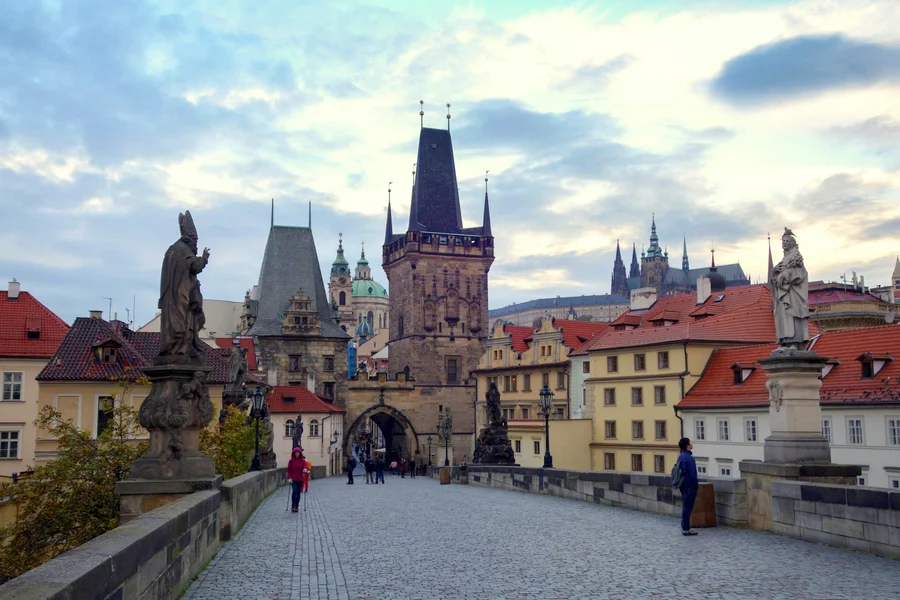
Prague, the “City of a Hundred Spires,” is one of Europe’s best-preserved medieval capitals. Its skyline of Gothic towers, Baroque domes, and Art Nouveau facades creates a fairytale atmosphere that is as enchanting as it is historic.
Getting Around
Prague’s public transport system is one of the best in Europe, featuring a fast Metro (Lines A, B, and C) and an extensive network of iconic red trams.
Public transport works on a time-based system. Buy your ticket from a machine or the Lítačka app, but you must validate it once in the yellow machines before boarding. Forgetting this can lead to a heavy fine from plain-clothes inspectors.
Use PID Lítačka to buy single tickets (30/90 minutes) or standard 24-hour and 72-hour transit passes.
Use Citymapper for the most intuitive step-by-step navigation, including “best carriage” guidance and precise station exit details.
NOTE: Online tickets purchased via PID Lítačka must be “activated” in the app 2 minutes before boarding.
Avoid hailing taxis on the street, especially in the Old Town, as overcharging is common. Always use an app like Liftago or have your hotel book a car for a fixed price.
Uber is the superior choice for seamless airport transfers as the official airport partner with dedicated terminal pickup zones.
Bolt typically offers the lowest fares and integrated e-scooter access for budget-conscious city travel.
Where to Stay
Malá Strana (the Lesser Town) is nestled between the river and the castle, offering quiet, cobblestoned charm. For a more central stay near the Astronomical Clock, look in Staré Město (Old Town). If you want to experience local life and great beer, Vinohrady is a fantastic leafy neighborhood.
Staying right on the Old Town Square is tempting, but the hourly crowds and buskers can be very loud. Look for hotels in the side streets of Josefov for a more peaceful but still central stay.
Ad: As a Booking.com partner, we may earn a commission from your booking.
Things to Do
Prague Castle and Charles Bridge
The sprawling Prague Castle complex is the largest ancient castle in the world. Afterward, walk across the 14th-century Charles Bridge at sunrise or sunset for the most magical views of the Vltava River.
Charles Bridge is packed with tourists from 9:00 AM until midnight. Visit at sunrise to see the bridge’s 30 statues emerging from the morning mist without the crowds.
Astronomical Clock and Old Town
Visit the Old Town Square to see the 600-year-old Astronomical Clock strike the hour. Then, wander into the winding backstreets to find traditional Czech pubs serving Pilsner Urquell.
The crowd watching the Astronomical Clock is a primary target for pickpockets. When the clock starts its show, keep your hand on your bag and your wallet in a front pocket.
Prague’s Old Town has many predatory money changers. Always use bank ATMs or authorized “Exchange” booths with fair rates. Better yet, use your card—most places in Prague accept contactless payments.
Ad: As a GetYourGuide partner, we may earn a commission from your booking.
Money & Shops
Prague is heavily card-friendly in 2026, but the “Cash Only” trap still exists in traditional pubs (Hospoda) and small souvenir stalls. Major supermarket chains like Albert, Billa, and Lidl accept all major credit cards and mobile payments without issue. Unlike neighboring Germany, most shops in Prague remain open on Sundays, though they may close slightly earlier (around 20:00).
When paying by card or withdrawing cash, the terminal will often ask if you want to pay in your “Home Currency” or “Local Currency (CZK).” Always choose CZK. Choosing your home currency triggers Dynamic Currency Conversion (DCC), which can cost you an extra 10-15% in hidden fees.
Pit Stops
Public restrooms are generally not free. Most Metro stations have toilets that require a 20 CZK coin, though many are being upgraded to accept contactless cards. For cleaner facilities, head to shopping malls like Palladium (Republic Square) or Nový Smíchov. Tap water is 100% safe and delicious; you can refill bottles at the various historical “pítka” (drinking fountains) scattered around the city center.
If you have a valid 24-hour or 72-hour public transport pass, you can use the small Vltava ferries (P-lines) for free. It’s a great way to see the city from the water without paying for a tourist cruise.
Local Ways
Czechs take their lunch seriously. Between 11:30 and 14:00, most restaurants offer a Polední menu (Lunch Menu)—a fixed-price deal that is significantly cheaper than the evening à la carte. Dinner is usually eaten between 18:00 and 20:00. When tipping, the standard is 10% for good service. Don’t leave the money on the table; when the waiter tells you the price, tell them the total amount you want to pay (e.g., if the bill is 450 CZK, say “500”).
In traditional pubs, placing a cardboard coaster on the table is the universal signal that you want a beer. The waiter will keep bringing fresh pints and marking your tab until you place your hand over the glass or put the coaster on top of it.
Health & Help
In Prague, a Lékárna (Pharmacy) is where you get medicine, marked by a large green cross. A Drogerie (like DM or Rossmann) is for toothpaste and shampoo but cannot sell aspirin or antibiotics. If you need help in the middle of the night, the pharmacy at Palackého 5 (Prague 1) is the primary 24/7 emergency location in the city center.
Avoid “tourist clinics” that advertise heavily in English near the Old Town. They often charge 5x the standard rate. If you have travel insurance, call your provider first; they will usually direct you to the Motol University Hospital, which has a dedicated foreign department.
In the event of an emergency in the Czech Republic, dial 112. This universal European emergency number connects you to English-speaking operators for police, medical, or fire services.
Safety & Accessibility
Prague is exceptionally safe, but pickpockets are professionals here. The “bottleneck” areas—the entrance to Charles Bridge and the crowd waiting for the Astronomical Clock—are the highest risk zones. For those with mobility issues, the “Prague twist” (uneven, historic cobblestones) is the biggest hurdle.
For planning an accessible route, use these English-language resources:
- Prague City Tourism Accessibility Guide: The official city portal with detailed maps of barrier-free routes.
- Vozejkmap: A crowd-sourced map (also available as an app) specifically for wheelchair users to find accessible toilets and entrances.
- PID Accessibility: The official transit site showing which Metro stations and tram lines are currently wheelchair accessible.