City Guide
Munich, the capital of Bavaria, is a city where “Lederhosen and Laptops” live in harmony. Known for its high quality of life, it offers a perfect mix of historical grandeur, world-class museums, and vast green spaces.
Getting Around
Munich has an exceptional public transport system (MVV) consisting of the U-Bahn (subway), S-Bahn (suburban trains), trams, and buses.
If traveling with 2–5 people, buy a Group Day Ticket. It is often cheaper than two individual tickets and covers unlimited travel across the entire network for the day.
Use MVGO for its official “swipe-to-pay” feature that automatically calculates the cheapest fare and integrates local bike-sharing
Citymapper remains the superior navigator for its “best carriage” advice and precise station exit details.
Use Freenow to book official taxis that can bypass traffic in dedicated bus lanes for the fastest travel through Munich.
Use Uber for a familiar and reliable experience with consistent upfront pricing.
Bolt serves as the budget-friendly alternative with the lowest fares, though you should expect slightly longer wait times due to its smaller driver fleet.
Where to Stay
Schwabing is the intellectual and artistic heart of Munich, full of cafes and boutiques. If you want to be near the historic center and Marienplatz, stay in Altstadt-Lehel. For a more trendy, nightlife-focused area, check out Glockenbachviertel.
Ad: As a Booking.com partner, we may earn a commission from your booking.
Things to Do
Marienplatz and the Glockenspiel
The central square, Marienplatz, is dominated by the New Town Hall. Watch the Glockenspiel performance (at 11 am and 12 pm) as its figurines re-enact events from Munich’s history.
In traditional Munich beer gardens, you are welcome to bring your own food as long as you buy your drinks there. Look for the wooden tables without tablecloths—those are the self-service areas.
The English Garden
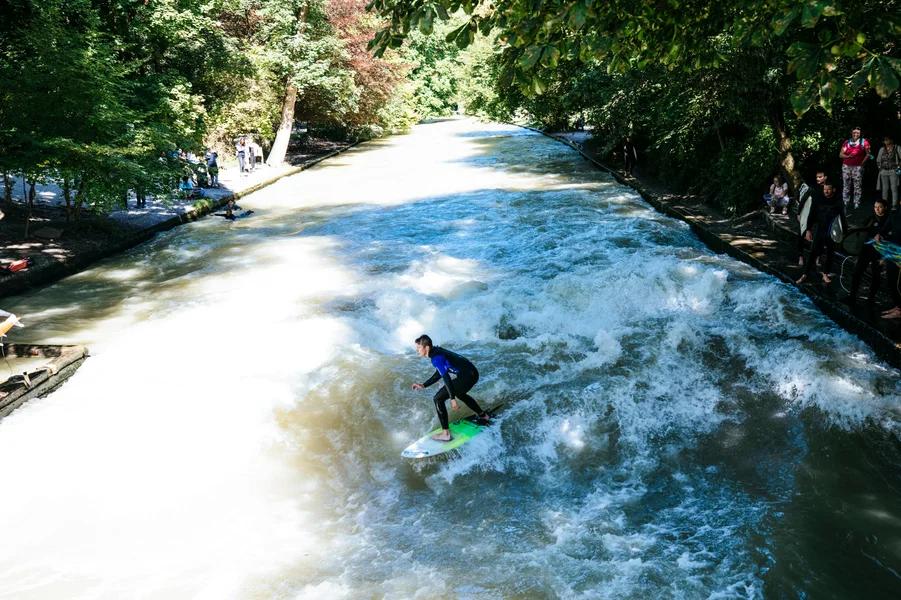
One of the world’s largest urban parks. Visit the Chinese Tower for a beer or watch the surfers on the Eisbach Wave at the park’s southern edge.
Many of Munich’s top art museums, including the Pinakotheken, offer entry for just €1 on Sundays. It’s the perfect day for an affordable cultural deep-dive.
Ad: As a GetYourGuide partner, we may earn a commission from your booking.
Money & Shops
While card acceptance has improved significantly by 2026, Munich still has a soft spot for cash. You will encounter “Nur Barzahlung” (Cash Only) signs at small bakeries, traditional Wirtshäuser, and some market stalls at the Viktualienmarkt. Always carry at least €20 in cash for these “analog” moments.
For groceries, Rewe, Edeka, and Lidl are 100% credit-card friendly. However, be aware of the strict Ladenschlussgesetz: almost all shops and supermarkets are closed on Sundays. If you’re desperate for supplies on a Sunday, head to the mini-markets inside the Hauptbahnhof or Ostbahnhof, which are legally allowed to stay open.
When paying by card, the terminal might ask if you want to pay in your “Home Currency” or “EUR.” Always choose EUR. Choosing your home currency triggers “Dynamic Currency Conversion,” which applies a terrible exchange rate and extra fees.
Pit Stops
Munich’s tap water is some of the best in Europe, sourced directly from the Alpine foothills. You can drink safely from any tap. During summer, look for the blue Trinkwasser (drinking water) fountains scattered around the Altstadt and the English Garden.
Finding a free restroom can be a challenge. Most public toilets (like the ones underground at Marienplatz or Stachus) cost €0.50 to €1.00, so keep some small coins handy. Alternatively, the large department stores like Oberpollinger or Ludwig Beck have clean facilities, though they often expect a small tip for the attendant.
In the summer, join the locals at the Isar River. It’s a massive, free public amenity. You can swim, BBQ in designated zones, or just chill. It’s the city’s unofficial living room.
Local Ways
Bavarians take their meal times seriously. Lunch is usually between 12:00 and 14:00, and dinner starts early, often around 18:00. If you want a table at a popular traditional restaurant like Augustiner am Platzl during peak season, use apps like OpenTable or Quandoo to book at least 2–3 days in advance.
A major social norm: Do not walk in the bike lanes. They are often paved with red bricks or marked with white lines on the sidewalk. Locals will not hesitate to ring their bells (or shout) if you’re blocking their path. When greeting locals, a friendly “Grüß Gott” is more common and appreciated than a standard “Guten Tag.”
In 2026, the standard tip is still 5–10%. Don’t leave the money on the table; when the waiter tells you the price, say the total amount you want to pay (e.g., if the bill is €18.50, say “Twenty” while handing over the cash or card).
Health & Help
In Munich, a Pharmacy (Apotheke) is where you get medicine; they are marked by a large red “A” sign. A Drugstore (DM or Rossmann) is for toiletries, sunscreen, and snacks, but they are legally forbidden from selling even basic painkillers like Ibuprofen.
If you need a pharmacy late at night or on a Sunday, look for the Apotheken-Notdienst (emergency rotation) sign in any pharmacy window; it lists which local shop is open 24/7 that day. For non-emergency medical issues after hours, the Bereitschaftspraxis Elisenhof right next to the Hauptbahnhof is the primary clinic for tourists and locals alike.
In the event of an emergency anywhere in Germany, dial 112. This universal number connects you to police, fire, and ambulance services and typically offers English-speaking assistance.
Safety & Accessibility
Munich is exceptionally safe, but the area immediately south of the Hauptbahnhof (Central Station) can feel a bit gritty at night. While rarely dangerous, it’s a hotspot for rowdy crowds and occasional scams. The biggest physical hurdle for many visitors is the cobblestones in the Altstadt, which can be brutal on ankles and wheelchair wheels.
For those with mobility issues, Munich’s U-Bahn and S-Bahn stations are almost all equipped with elevators, though they can occasionally be out of service.
English-Language Resources for Accessibility:
- MVV Barrier-free Travel: The official transit site with real-time elevator status and accessible route planning.
- Wheelmap.org: A crowdsourced map that is very active in Munich, showing the wheelchair accessibility of almost every cafe, shop, and museum in the city.
- Munich.travel Accessibility Guide: The official tourism board’s deep dive into accessible sights and hotels.