City Guide
London is a city of contrast, where historic landmarks meet modern architecture. Visit the Tower of London, Buckingham Palace, and the British Museum.
Explore the vibrant street art scene in Shoreditch, shop on Oxford Street, and enjoy a West End show. With its diverse culture and endless attractions, London has something for everyone.
Getting Around
London is best navigated by the Underground (Tube) and iconic red double-decker buses. For a scenic trip along the river, the Uber Boat by Thames Clippers connects key stops between Putney and Woolwich.
Public Transit
The main Tube lines for tourists:
- Central (red): East-West across Zone 1 (Oxford Circus, Liverpool St)
- Jubilee (silver): Waterloo, London Bridge, Canary Wharf
- Elizabeth (purple): Heathrow, Paddington, Liverpool St, Stratford
- Northern (black): London Bridge, Bank, King’s Cross
- Piccadilly (dark blue): Heathrow direct to central London
- Victoria (light blue): Victoria, Oxford Circus, King’s Cross
Pay by contactless card or phone - no Oyster card needed. Bus or tram single: £1.75 (Hopper: unlimited buses within 1 hour); Tube Zone 1 peak: £3.10, off-peak: £3.00; daily cap Zones 1-2: £8.90; weekly cap: £44.70.
Current fares - Transport for LondonYou don’t need an Oyster card or paper tickets. Just tap your contactless credit card or phone on the yellow readers. It automatically calculates the cheapest fare and applies a daily price cap.
Use the “Step-free mode” in the TfL Go app to find routes that only use lifts/elevators.
Most Londoners use Citymapper. It is more intuitive for first-time visitors, showing exactly which section of the train to board for the easiest exit near the station lifts.
Taxi & Rideshare
Black cabs (licensed taxis) can be hailed on the street or booked via Gett; fares are metered and typically higher than rideshare, but drivers know every street without needing GPS.
London rideshare prices fluctuate wildly based on “surge pricing.” Download both Uber and Bolt to compare prices in real-time; Bolt often offers “Green” or promotional discounts that Uber lacks.
Walking & Cycling
The South Bank from the London Eye to Tower Bridge is fully pedestrian and free - the best way to see the riverside skyline. The Elizabeth Line (purple) runs faster and air-conditioned at the same fare as older Tube lines; prefer it over Central or Jubilee wherever your route allows. Out east, the Woolwich Ferry is a free pedestrian and vehicle crossing.
Santander Cycles (the red hire bikes) are docked across central London - £3.30 unlocks unlimited 30-minute rides for 24 hours. Use the Santander Cycles app or any docking terminal.
Traffic flows on the left in the UK. If you are used to driving on the right, always look right first before stepping off the curb. The correct direction is often painted on the ground at busy crossings.
Where to Stay
South Kensington is the gold standard for an elegant, museum-filled stay, while the South Bank offers a vibrant riverside pulse. For a more alternative atmosphere, Shoreditch provides a trendy backdrop of street art.
London is too big to be fully walkable. Ensure your hotel is within a 5-minute walk of a Tube station—ideally on the Jubilee or Elizabeth lines for the fastest cross-city travel.
Ad: As a Booking.com partner, we may earn a commission from your booking.
Things to Do
The British Museum

A vast collection dedicated to human history. It’s impossible to see everything in one day, so pick two or three galleries to focus on.
Entry is free, but you must book a timed entry slot online at least a week in advance. Without a booking, you may be turned away during busy periods.
The Tower of London

Once a palace and a prison, it now houses the spectacular Crown Jewels.
Arrive at the Tower 15 minutes before opening and head straight to the Crown Jewels exhibit. You’ll avoid the hour-long lines that form by 11:00 AM.
National Gallery

Over 2,300 paintings from the 13th to 19th century, including Van Gogh’s Sunflowers and Turner’s The Fighting Temeraire. Free entry. The building sits at the north end of Trafalgar Square - arrive before 10:30 AM to have the galleries almost to yourself.
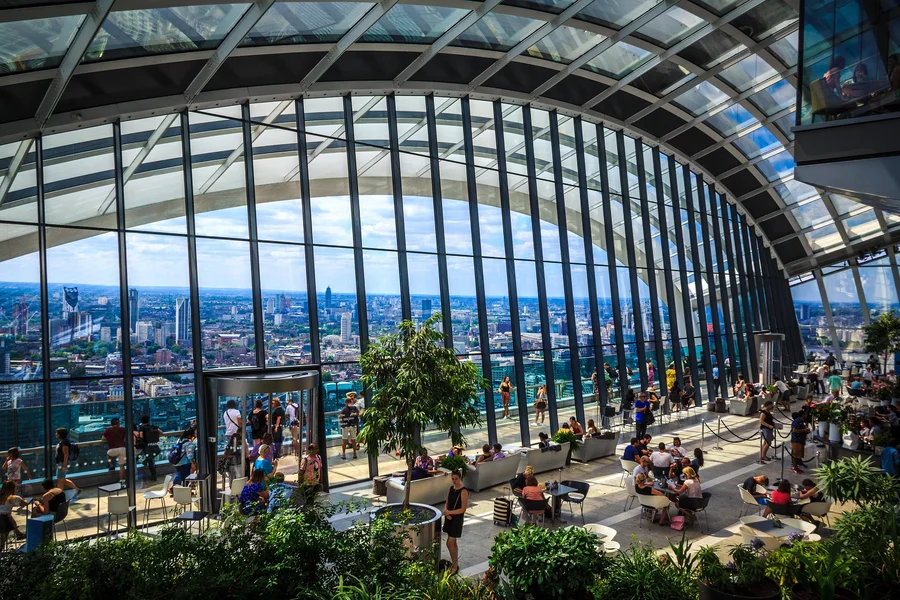
The Sky Garden at 20 Fenchurch Street (the ‘Walkie Talkie’ building) is free and gives a 360-degree view of the city from 35 floors up. Entry is free but must be booked in advance at skygarden.london. Slots go fast - book as soon as your dates are confirmed.
Ad: As a GetYourGuide partner, we may earn a commission from your booking.
Book Ahead
Lead times vary significantly by season. The table shows how far ahead to book based on your travel date — peak season attracts much larger crowds and tickets sell out weeks earlier.
Peak and Off-peak season times:
Bank holidays (Easter, May Day, August Bank Holiday) spike demand sharply even outside the main summer window.
School holiday slots routinely sell out 8 weeks ahead. Book the moment your London dates are confirmed.

Timed entry required. Closed to visitors on Sundays. Morning slots book up 2-3 weeks ahead in summer.

Entry is free. Without a timed slot you may be turned away on busy days.
Advance tickets save 15% (£27.20 vs £32.00 at the gate) and guarantee entry on sold-out summer days.

Walk-ups are possible but cost more. Sunset and golden-hour slots fill 3+ weeks ahead in summer. Book in advance for a better price and guaranteed time slot.

Walk-up queues reach 45-60 min in summer. Book online to save on the gate price and skip the standby line. Late afternoon slots give a sunset view during the 30-min rotation.
Walk-up is possible but queues reach 45-60 min by 11 AM in summer. Advance tickets save time, not entry.
State Apartments can close at short notice for royal events. Check before you travel.

Walk-up is usually fine outside July and August.
Closed or restricted during exam season (late April to mid-June). Check access dates before booking your train.

Walk-up is fine on weekdays outside summer. Weekend morning slots book up 2-3 weeks ahead. Advance tickets save roughly 10% on the door price.

State Rooms only open late July to late September while the Royal Family is away. Tickets sell out weeks ahead on summer weekends. Check the Royal Collection Trust site for exact opening dates each year.
Day Trips
All five are reachable by train from central London and worth a full day out of the city.
Stonehenge

The prehistoric stone circle built around 3000 BC is the most recognised archaeological site in Britain, standing in open Wiltshire countryside with nothing around it for miles.
Getting there: Direct train from London Waterloo to Salisbury (about 1h 22min, South Western Railway), then a taxi to the Stonehenge Visitor Centre (about 20 min, roughly £15-20). A seasonal local bus service also runs from Salisbury station to the site.
Booking: Timed entry is mandatory. Book online in advance at English Heritage - advance tickets cost £27.20 (adult), saving 15% on the £32.00 gate price. The site sells out on peak summer days.
Duration: Allow 2-3 hours on site, including the Visitor Centre exhibition and the walk around the stones.
Stonehenge opens at 9:30 AM. Aim for the first entry slot and you will have the site nearly to yourself. By mid-morning the coach tours arrive and the outer path becomes crowded.
Windsor Castle

The oldest and largest occupied castle in the world, Windsor has been a working royal residence since 1070. The State Apartments and St George’s Chapel are the highlights.
Getting there: Train from London Paddington to Windsor & Eton Central (22-28 min via Slough). The castle is a 5-min walk from the station.
Booking: Advance tickets cost £32 (adult); on-the-day entry is £36. Book directly at the Royal Collection Trust website. Because Windsor is a working royal palace, parts of it can close at short notice - check before you travel.
Duration: Allow 1.5-2 hours.
St George’s Chapel is closed to visitors on Sundays. If the chapel matters to you, choose any other day.
Cambridge

One of the world’s great university cities, Cambridge is a compact, walkable town built around medieval colleges and the flat waterway known as the Backs - best seen from a flat-bottomed punt.
Getting there: Direct train from London King’s Cross to Cambridge (50-55 min, Great Northern). Trains run every 15-30 minutes. Cambridge station is a 20-min walk or short taxi (£8-10) from the city centre. Off-peak day return: about £22-28; advance fares from about £11 each way.
Booking: King’s College (the most visited college) charges £14 for adult entry - book online at the King’s College website. Most other colleges are free to walk past from outside. Punting tours from Mill Lane hire companies fill up fast in summer - book ahead.
Duration: 6-8 hours gives you King’s College, a punt on the Backs, lunch, and one additional college or museum.
From late April to mid-June many colleges restrict or close visitor access during examinations. Check college access dates before booking your train.
Bath

A Georgian spa city and UNESCO World Heritage Site, Bath holds the best-preserved Roman bathing complex in northern Europe. The city centre, built almost entirely from honey-coloured limestone, is worth the trip on its own.
Getting there: Direct train from London Paddington to Bath Spa (about 1h 15-20min, GWR). Bath Spa station is a 5-min walk from the Roman Baths. Advance fares from about £24.70 one way (Trainline); off-peak day returns vary but typically run £30-50.
Booking: Roman Baths tickets cost £25 online (£26 on the day). Booking in advance at romanbaths.co.uk is strongly recommended - the site sells out on summer weekends and bank holidays.
Duration: Allow 1.5-2 hours at the Roman Baths. A full day gives you time to walk up to the Royal Crescent, have lunch in the city centre, and (if booked well in advance) visit Thermae Bath Spa in the afternoon - a modern working thermal spa fed by the same hot spring.
The Roman Baths opens at 9:00 AM. Arrive then and the Great Bath terrace is calm. By 11:00 AM on busy days it is very crowded. The next best slot is after 3:30 PM.
Warner Bros. Studio Tour (Harry Potter)

The original sets, costumes, and props from all eight films are displayed across two giant soundstages in Leavesden, Hertfordshire. The Great Hall, Diagon Alley, and the full-scale Hogwarts model are the centrepieces. This is a theme-park-scale attraction, not a small exhibit - allow a full half-day minimum.
Getting there: Train from London Euston to Watford Junction (about 20 min; use contactless or Oyster to tap in/out - no separate ticket needed). At Watford Junction, the official Warner Bros. shuttle bus departs from directly outside the station (free with your studio ticket, runs every ~20 min, takes 15 min). Total door-to-door from central London: about 45-60 min.
Booking: All entry is timed. Adult tickets from £56. Book as far in advance as possible - the site sells out weeks ahead during school holidays and weekends. Book only at wbstudiotour.co.uk to avoid third-party markups.
Duration: 3-4 hours minimum on site. Most visitors spend closer to 5 hours.
School holiday slots fill up fast, sometimes selling out 6-8 weeks in advance. If you are visiting in July or August, check availability as soon as your London dates are confirmed.
Money & Shops
London is effectively a cashless society in 2026. You can go an entire week without touching a physical banknote.
Cards & Cash
Visa and Mastercard are universal. While Amex is common in hotels and major chains, some independent cafes still reject it. Avoid using “Basic” debit cards from non-major international banks that lack chips; they often fail at older terminals.
When a card machine asks if you want to pay in your home currency or GBP, always choose GBP. The machine’s conversion rate is significantly worse than your bank’s.
ATMs
Use bank-branded ATMs at Barclays, HSBC, Lloyds, or NatWest branches - these charge no fee if you have a fee-free travel card. Avoid ATMs at Heathrow, major train stations, and near tourist landmarks; these can charge up to £5.50 per withdrawal.
Always select GBP when prompted. Choosing your home currency (Dynamic Currency Conversion) costs 5-8% more than your bank’s rate.
London ATM fees and how to avoid them - London LifeShopping Hours
Most shops open 09:00-18:00 Monday to Saturday. Large shops are legally restricted to 6 hours of Sunday trading (usually 11:00-17:00 or 12:00-18:00). Small “Express” grocery stores are exempt and stay open late.
Most restaurants automatically add a 12.5% “Optional Service Charge” to the bill. You aren’t expected to tip on top of this, and you can legally ask to have it removed if the service was poor.
Pit Stops
Restrooms
Public toilets are rare and often cost £0.50. Instead, head to large department stores like John Lewis or Selfridges, or any of the free national museums. They have clean, free facilities.
Water
London tap water is perfectly safe. Use the Refill app to find thousands of stations, or look for the Victorian drinking fountains in major parks.
Rest Spots
London’s royal parks are free, central, and genuinely useful for a mid-day break. St James’s Park sits between Westminster and Buckingham Palace - benches face the lake and are rarely full outside summer weekends. Hyde Park is a short walk from Knightsbridge or Marble Arch. Along the river, the South Bank walkway between Waterloo Bridge and Tower Bridge has covered seating areas and is pedestrianized the entire length. All are free with no purchase required.
Local Ways
Dining Hours
Lunch is strictly 12:00-14:00. Dinner peaks at 19:30. Many kitchens close by 21:30, even on weekends.
Reservations
If you want to eat at a popular spot on a Friday or Saturday, book via OpenTable or TheFork at least two weeks out. Walk-ins in Soho are nearly impossible during peak hours.
Stand on the RIGHT of the escalator. If you stand on the left, you will be met with polite but firm “Excuse me’s” or aggressive sighing from commuters.
Tipping & Etiquette
10-12% is the standard if no service charge is added. In pubs, you do not tip for a round of drinks ordered at the bar.
London local customs and etiquetteIn London, “Alright?” isn’t a question about your well-being—it’s just a way of saying “Hello.” You can respond with “Alright” or “Yeah, you?”
Health & Help
Pharmacies
Boots and Superdrug are the main chains. A “Pharmacy” is a specific counter within these stores (look for the green cross). For basic aspirin or plasters, you can buy them off the shelf in any supermarket.
Most pharmacies close by 18:00. For 24-hour service, Zafash Pharmacy in South Kensington is the most reliable option for tourists.
Non-Emergency Number
If you have a medical issue that isn’t life-threatening, call 111. It’s a free NHS service that directs you to the right clinic or doctor, saving you from a long wait in A&E.
Hospitals
NHS A&E (emergency) is free for everyone. For non-emergency NHS treatment, EU visitors should carry their EHIC, which is accepted in the UK. All other visitors should carry comprehensive travel insurance covering medical evacuation.
Private (English-speaking, concierge):
- Wellington Hospital, 125-135 Wellington Place NW8 9LE, Tube: St John’s Wood, +44 20 7483 5000
NHS (central London A&E):
- Guy’s & St Thomas’ NHS, Westminster Bridge Rd SE1 7EH, Tube: Westminster, +44 20 7188 7188
- St Mary’s Hospital, Praed St W2 1NY, Tube: Paddington, +44 20 3312 6666
In the event of an emergency in the UK, dial 999. For non-emergency police matters at the station, you can text the British Transport Police on 61016.
Safety & Accessibility
The US State Department rates the UK at Level 2: Exercise Increased Caution, primarily due to terrorism risk. The UK raised its national terrorism threat level to SEVERE in April 2026.
UK Travel Advisory - US State DepartmentLondon has seen a rise in “phone snatching” by thieves on bikes or scooters. Avoid using your phone while standing still near the curb or outside Tube stations; step into a shop or away from the street if you need to check a map.
Safety Risks
- Phone snatching by thieves on bikes/scooters, particularly in Camden and Westminster
- “Street games” like Three-Card Monte on Westminster Bridge: scams designed to distract while an accomplice picks your pockets
- Pickpocketing on the Tube, especially on the Central and Jubilee lines near tourist zones
Mobility Hurdles
London is an old city. Many Tube stations (like Covent Garden) have hundreds of stairs and no lifts. Always check the “Step-Free” map on the TfL website before traveling.
Every single London bus is low-floor and wheelchair accessible with a dedicated ramp. If the Tube looks too daunting, the bus is your best friend for accessibility.
Accessibility Apps
- AccessAble: Detailed accessibility guides for thousands of London venues, including door widths and toilet layouts.
- TfL Go: The official transport app has a “Step-free mode” that filters routes for wheelchairs or strollers.