City Guide
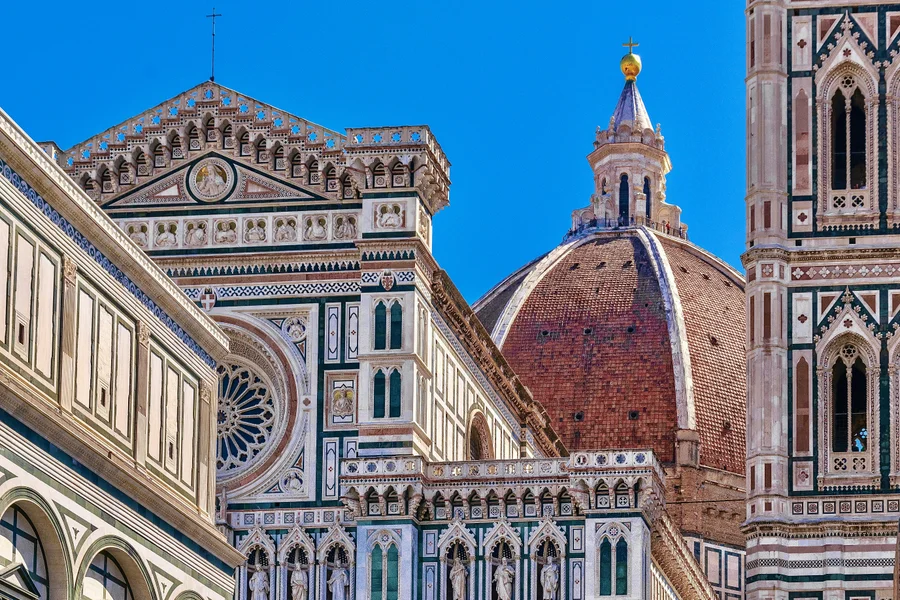
Florence is the jewel of the Renaissance, a city that feels like one large museum. From the massive terracotta dome of the Duomo to the world-class galleries, it is a city that celebrates human achievement.
Getting Around
Florence is an “open-air museum” and is best explored on foot. The historic center is compact and largely pedestrianized.
Florence is famous for its narrow, uneven medieval cobblestones. Sturdy, cushioned walking shoes are a must to avoid fatigue and twisted ankles.
For longer distances, use the small electric “C” buses (C1, C2, C3, and C4) which are designed to navigate the city’s tightest alleys. Taxis cannot be hailed on the street; you must find a designated taxi stand or use the IT Taxi app.
Children under 1 metre in height ride free on all Autolinee Toscane buses when travelling with a fare-paying adult and not occupying a seat. Only one free child per adult applies; each additional child under 1 metre needs a standard ticket. Full policy: AT Bus children’s travel rules.
Transport strikes (sciopero) are common in Italy and regularly affect Autolinee Toscane buses in Florence. Before any travel day, search online for the current strike schedule to check upcoming dates and any guaranteed service windows.
Important: If you buy a ticket via the AT Bus app, you must activate it manually within the app before boarding.
Choose itTaxi or AppTaxi for the best reliability in Florence, as they are the official apps used by the city’s two main taxi cooperatives and provide the largest fleet of standard-fare cabs.
While Freenow and Uber are popular across Europe, they have very few active drivers in Florence and often struggle to find you a car during busy periods compared to the local dispatcher apps.
Where to Stay
Santa Croce is an excellent choice for its central location and vibrant evening scene. For a more local, artisanal vibe, cross the river to the Oltrarno district, where you’ll find craftsmen’s workshops and charming piazzas.
While staying right next to the Duomo is tempting, the area is extremely crowded and noisy around the clock. Look for hotels just 10 minutes away in Sant’Abbrogio for a quieter, more authentic experience.
Ad: As a Booking.com partner, we may earn a commission from your booking.
Things to Do
Renaissance Masterpieces
The Uffizi Gallery and the Accademia Gallery (home to Michelangelo’s David) are non-negotiable for art lovers.
Florence is compact and very popular. Tickets for the major museums, especially David and the Uffizi, must be booked weeks in advance during peak season.
The Duomo
Climb to the top of Brunelleschi’s Dome or Giotto’s Campanile for the best views over the city’s red-tiled roofs. The Duomo itself is free to enter, but the climb requires a pre-booked ticket.
For a high-quality, casual lunch, head to the upstairs floor of the Mercato Centrale. It’s a gourmet food hall where you can try everything from truffle pasta to local Florentine steak in a relaxed atmosphere.
Ad: As a GetYourGuide partner, we may earn a commission from your booking.
Money & Shops
Card acceptance is legally mandated in Italy, but small vendors (especially gelaterias and newsstands) may still claim their terminal is “broken” for transactions under €10. Always carry a €20 backup. For groceries, Conad City and Carrefour Express are ubiquitous in the center and 100% credit-card friendly.
While the historic center stays open on Sundays, many shops close for a “riposo” (break) between 1:00 PM and 4:00 PM. When paying by card, terminals will often offer Dynamic Currency Conversion (DCC)—always select “EUR” or “Local Currency” to avoid the bank’s predatory exchange rates.
Don’t be surprised by a €2–€4 charge per person on your restaurant bill labeled “Coperto.” This is a standard cover charge for bread and table settings, not a scam, and it is not a tip for the waiter.
Pit Stops
Clean public restrooms are rare. Your best bet is the top floor of the La Rinascente department store in Piazza della Repubblica or the Mercato Centrale. Most public toilets (like those near Piazza della Signoria) require a €1 coin, so keep change handy.
Tap water in Florence is safe and high-quality. You can find public fountains, known as fontanelli, throughout the city. Some modern ones even offer free chilled still or sparkling water. For high-value transit, the T2 Tram line is the most efficient way to get from the airport to the city center for just €1.70.
Local Ways
Florentines eat late. Lunch starts around 1:00 PM, and dinner rarely begins before 8:00 PM. To secure a table at popular spots like Trattoria ZaZa or I’Tosto during peak months, use TheFork app or call 2–3 days in advance.
Socially, a “Ciao” is reserved for friends; use “Buongiorno” (until 4 PM) or “Buonasera” to be respectful. Tipping is not expected in 2026, but rounding up the bill or leaving €1–€2 per person for exceptional service is a kind gesture.
Ordering a cappuccino after 11:00 AM is the fastest way to mark yourself as a tourist. Locals believe milk after a meal ruins digestion; stick to an espresso or macchiato in the afternoon.
Health & Help
Pharmacies are marked by a Neon Green Cross. If the cross is Blue, it is a Parafarmacia, which sells toiletries and over-the-counter meds but cannot dispense prescriptions. For late-night needs, the Farmacia Comunale inside the Santa Maria Novella train station is open 24/7.
If you need a doctor, look for “Medical Service Florence” (Via Lorenzo il Magnifico), which specializes in multi-lingual care for tourists.
In the event of an emergency in Italy, dial 112. This universal number connects you to the Carabinieri (Police), fire, and medical services. Operators are typically available in English.
Safety & Accessibility
Florence is generally safe, but pickpockets are highly active in the San Lorenzo Market and around the SMN Train Station. Keep your bag in front of you in these bottlenecks.
Mobility can be a challenge due to narrow, crowded sidewalks and high medieval curbs. For planning, use these English-language resources:
- Feel Florence: The official tourism site with dedicated “Accessible Florence” itineraries.
- Kimap: An app providing real-time accessibility mapping and navigation for wheelchair users in the city center.
On sidewalks near the Uffizi, scammers lay out “original” paintings on the ground. If you step on one, they will aggressively demand payment. Keep your eyes on the path, not just the architecture.