City Guide
Berlin is a city of resilience and transformation, where grit meets high culture. It is a sprawling metropolis that rewards exploration beyond its central core, offering a unique blend of 20th-century history and 21st-century innovation.
Getting Around
Berlin is a massive, decentralized city, but its public transport system (VBB) is one of the best in the world. The city is divided into zones A, B, and C; most travelers only need an AB ticket. The U-Bahn (underground) and S-Bahn (urban rail) are the backbone of the city, complemented by a dense network of trams in the East and buses in the West.
In Berlin, simply buying a ticket is not enough. Before boarding a train or immediately after boarding a bus/tram, you must stamp your ticket in the small yellow or red boxes on the platform or inside the vehicle. An unstamped ticket is considered invalid and can result in a heavy fine.
Use BVG Fahrinfo as your official source for buying all mobile tickets and viewing real-time local disruptions.
NOTE: Tickets bought in the BVG Fahrinfo app are active (validated) immediately. Do not buy them until you see your train or bus approaching.
Use Citymapper for a superior navigation interface that includes “best carriage” guidance and precise station exit instructions.
Freenow is the local favorite and allows you to summon official taxis as well as private rides, providing better availability during peak hours or rain.
Where to Stay
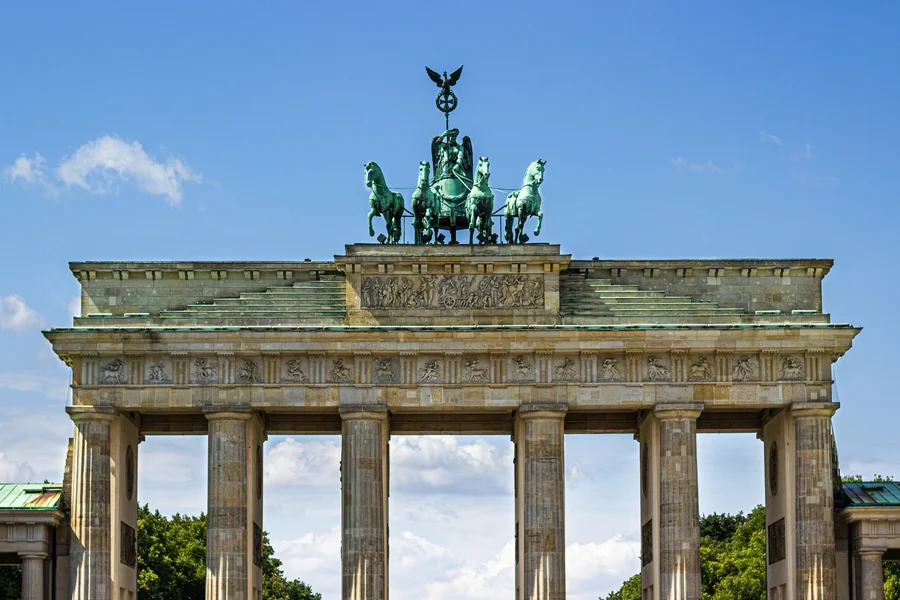
Mitte is the historic heart, perfect for first-timers who want to be near Museum Island and the Brandenburg Gate. For a cooler, local vibe, look at Friedrichshain or Kreuzberg, known for their street art, markets, and legendary nightlife.
Berlin doesn’t have a single “downtown.” Instead, it’s a collection of distinct neighborhoods called Kiezes. When choosing where to stay, prioritize proximity to a U-Bahn or S-Bahn station over a central map location; the city is vast, and easy rail access will save you hours of travel time.
Ad: As a Booking.com partner, we may earn a commission from your booking.
Things to Do
Living History
Walk through the Brandenburg Gate, then visit the Memorial to the Murdered Jews of Europe. A section of the Berlin Wall at the East Side Gallery showcases powerful murals that represent the city’s spirit of freedom.
In Berlin restaurants, tap water isn’t automatically served. If you’d like it, specifically ask for “Leitungswasser.” When tipping, rounding up the bill to the nearest 5 or 10 Euro is standard practice—large US-style percentages are not expected.
World-Class Museums
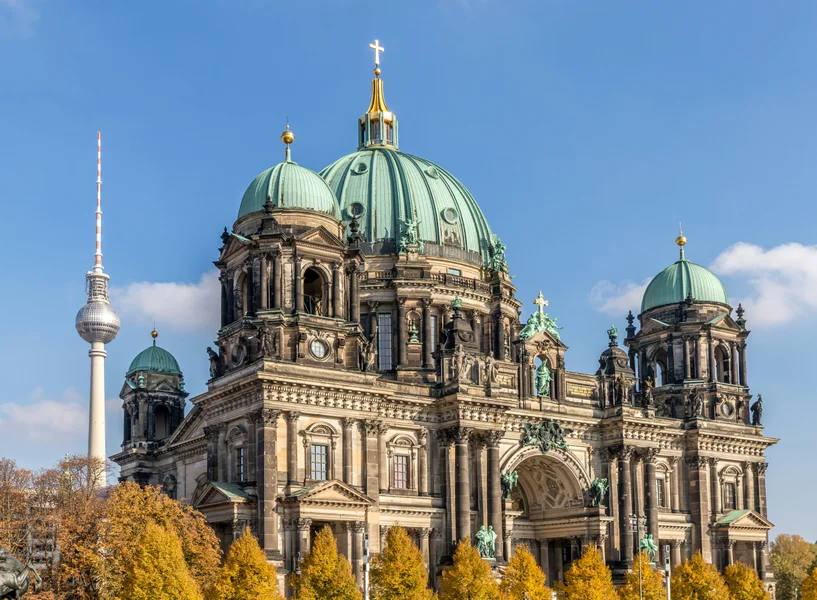
Museum Island, a UNESCO World Heritage site, houses five world-renowned museums. The Pergamon Museum (partially closed for renovation) and the Neues Museum (home to Nefertiti) are highlights.
Ad: As a GetYourGuide partner, we may earn a commission from your booking.
Money & Shops
While card acceptance has improved, Berlin remains surprisingly cash-heavy for a major capital. Many small cafes, “Spätis” (late-night convenience stores), and even some restaurants still display “Nur Bargeld” (Cash Only) or “EC-Karte only” signs. The latter means they only accept German debit cards, not international Visa or Mastercard.
For grocery shopping, Rewe, Edeka, Lidl, and Aldi are 100% credit-card friendly. Be aware that almost all shops are strictly closed on Sundays.
If you are in a pinch on a Sunday, the supermarkets located inside major train stations like Hauptbahnhof, Ostbahnhof, and Südkreuz remain open.
When paying by card, the terminal may ask if you want to pay in your home currency or Euros. Always choose Euros. Choosing your home currency triggers “Dynamic Currency Conversion,” which carries a significantly worse exchange rate.
Pit Stops
Public restrooms in Berlin are rarely free. Look for the silver “Berliner Toiletten” pods on street corners; they usually cost €0.50 and most now accept contactless payment. Alternatively, large shopping malls like the Mall of Berlin (Potsdamer Platz) or Alexa (Alexanderplatz) offer clean, reliable facilities for a small fee.
Tap water is perfectly safe to drink. During summer months, you can find free public drinking fountains (Trinkbrunnen) scattered across the city, often near major parks and squares.
If you have a standard BVG transit ticket (Zone AB), you can use the F10 Ferry from Wannsee to Alt-Kladow. It’s a 20-minute scenic boat ride across the lake that is fully included in your transport pass.
Local Ways
Berliners eat dinner relatively late, usually between 7:00 PM and 9:00 PM. If you want to secure a table at a popular restaurant in neighborhoods like Kreuzberg or Neukölln, use the Quandoo or OpenTable apps—reservations are highly recommended for Friday and Saturday nights.
A major social faux pas is walking in the bike lanes. These are often marked by red bricks on the sidewalk; stay clear of them or expect a sharp ring of a bell and a verbal reprimand from a cyclist. When it comes to tipping, the 2026 standard is to round up the bill or add about 5–10%. Instead of leaving money on the table, tell the server the total amount you wish to pay as they process your card or cash.
Health & Help
In Berlin, you must distinguish between an Apotheke (Pharmacy) and a Drogerie (Drugstore like dm or Rossmann). Only an Apotheke, marked by a large red “A” symbol, can sell over-the-counter medications like Ibuprofen or Aspirin.
If you need a pharmacy outside of normal business hours, look for the “Notdienst” (Emergency Service) sign in any pharmacy window; it will list the nearest 24-hour rotating pharmacy. In tourist-heavy Mitte, the Hauptbahnhof Apotheke inside the central station has extended hours and English-speaking staff.
In the event of an emergency in Germany, dial 112 for fire and medical services or 110 for police. English-speaking operators are available.
Safety & Accessibility
Berlin is generally safe, but pickpocketing is common in high-traffic areas like Alexanderplatz, Kottbusser Tor, and on the U8 line. Keep your bags zipped and in front of you in crowded trains.
For those with mobility issues, Berlin’s vastness is the biggest hurdle. While most U-Bahn and S-Bahn stations have elevators, they are frequently out of service. Use these English-language resources to plan your routes:
- Wheelmap.org: A worldwide map for finding wheelchair-accessible places; very active in Berlin.
- BrokenLifts.org: A vital real-time tracker for elevator outages across the Berlin transit network.
- Berlin.de Accessibility Guide: The official city portal’s guide for visitors with disabilities.
Many historic areas (like Nikolaiviertel) and trendy side streets in Prenzlauer Berg still feature original “Kopfsteinpflaster” (cobblestones). These can be very difficult for manual wheelchairs and strollers; stick to the main paved thoroughfares where possible.