City Guide
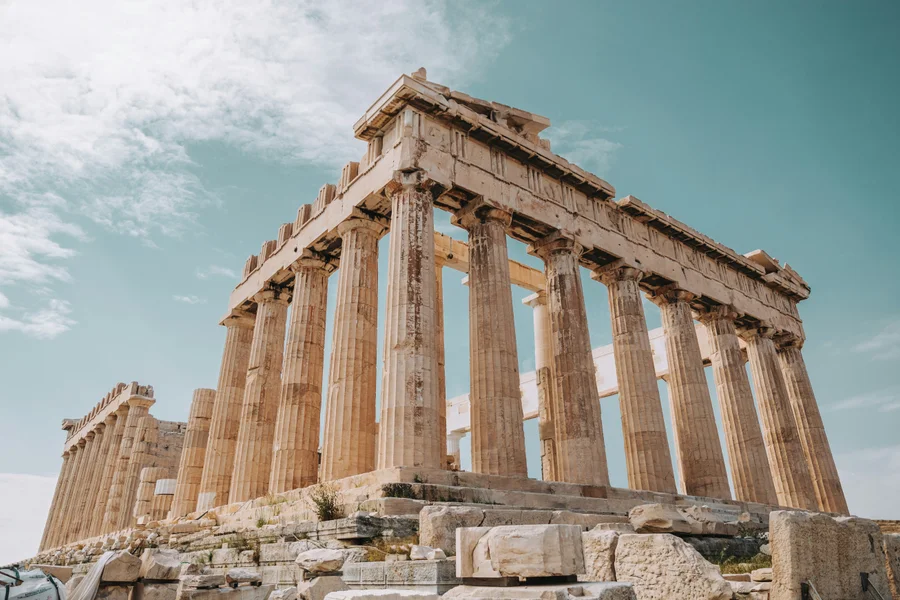
Athens is the cradle of Western civilisation — a sprawling, sun-scorched capital where a 2,500-year-old temple shares the skyline with rooftop bars. Chaotic, warm, and addictively alive.
Getting Around
Public Transit
Athens runs on three metro lines, a tram network, and an enormous bus fleet. The Metro (operated by STASY) is the fastest option for tourists: clean, air-conditioned, and mostly underground. Tickets are available at all station vending machines in English.
- Line 1 (Green — Ilektrikos): Piraeus port ↔ Kifisia. Mostly above-ground, scenic, and the oldest line in the system.
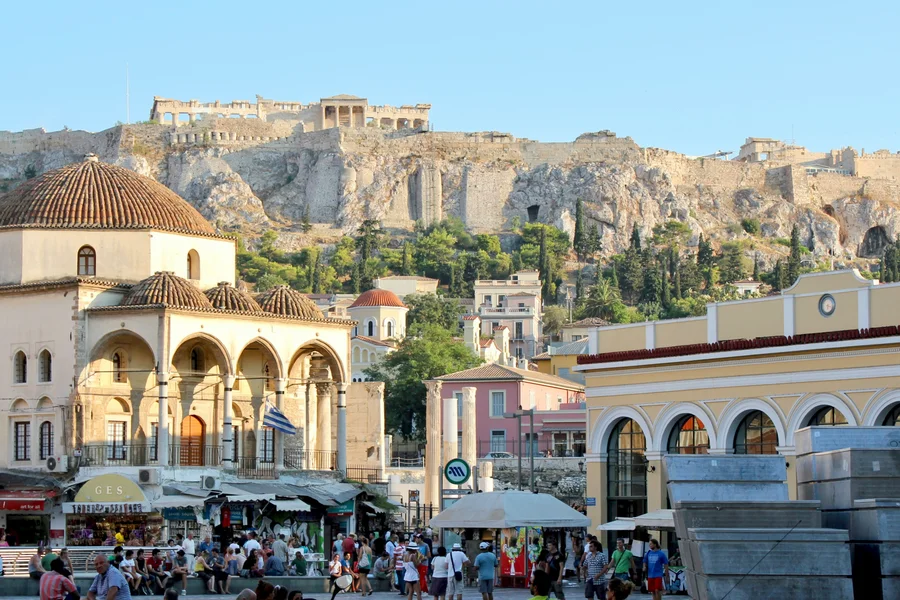
- Line 2 (Red): The tourist workhorse. Get off at Akropoli for the Acropolis, Syntagma for the parliament, and Monastiraki for the flea market.
- Line 3 (Blue): Runs from the western suburbs through the city centre — change at Syntagma for Line 2.
Unlike most European systems, the Athens metro requires ticket validation both on entry AND on exit. Missing the exit validation is a fineable offence. Trams and buses only require one validation at the start of your journey.
Standard tickets cost €1.20 and are valid for 90 minutes with unlimited transfers between metro, bus, tram, and trolleybus. For stays of a few days, the 5-Day Pass (€8.20) is the best value. For airport and port connections, see the Athens transit guide.
The Tram connects Syntagma and Zappeion with the coastal neighbourhoods of Neo Faliro, Glyfada, and Voula — perfect for a half-day at the Athens Riviera beaches. Since September 2025, Lines 2 and 3 operate 24 hours on Saturdays.
OASA Ticket PricesTaxi & Rideshare
Taxis in Athens use a meter. The regulated fixed fare from ATH airport to the city centre is €40 (day rate, 05:00-00:00) or €55 at night (00:00-05:00). For in-city rides, use FREE NOW, Uber, or Bolt to lock in a price before you board and avoid meter games.
Walking & Cycling
The historic core — from Monastiraki to the Acropolis, Syntagma, and Plaka — is very walkable but physically demanding. Expect steep cobblestone paths and polished marble steps around archaeological sites. Wear sturdy, closed-toe shoes.
Cycling is possible along the Athens Riviera coast road but challenging in the city centre, where traffic is dense and dedicated bike lanes are sparse. Most visitors use the metro and their feet.
Where to Stay
Koukaki is the go-to neighbourhood for first-time visitors: quiet, residential, walkable to the Acropolis, and packed with excellent coffee shops and local restaurants. Plaka, the old quarter beneath the Acropolis, is atmospheric but more touristy and expensive. For nightlife, Psyrri and Monastiraki put you in the centre of the action.
Several rooftop hotels in Koukaki and Thissio offer direct Parthenon views from the breakfast terrace — often at lower prices than the equivalent Plaka hotels a street away. Search specifically for “Acropolis view” when filtering results.
Kolonaki is the upscale embassy district — excellent for luxury stays, quieter streets, and a short metro ride to everything. Avoid Omonia for first visits; it is undergoing regeneration but some backstreets remain rough after dark.
Ad: As a Booking.com partner, we may earn a commission from your booking.
Things to Do
The Acropolis and its Museums

No trip to Athens is complete without the Acropolis. Timed entry is mandatory — you must choose an hourly slot when booking, and walk-up queues can run 45 minutes to 2 hours in peak summer. Book in advance at hhticket.gr. The single-entry ticket is €30 year-round (the old combined ticket covering five sites was discontinued in April 2025; each site now requires a separate ticket).
Directly below, the Acropolis Museum (Line 2, Akropoli station) houses the original Parthenon frieze fragments in a spectacular modern building. Allow two to three hours. Admission is €15 (April-October) or €10 (November-March). The glass floor reveals an active archaeological dig beneath your feet.
The Acropolis hill reaches 40°C+ in July and August with almost no shade. The site opens at 08:00 — arrive at opening or in the last two hours before closing to avoid peak heat and crowds. Wear sturdy shoes: marble stairs are polished smooth and extremely slippery.
Ancient Agora and Monastiraki
The Ancient Agora — the civic heart of classical Athens — is less visited than the Acropolis but arguably more evocative. The reconstructed Stoa of Attalos houses a compelling museum. Directly adjacent, Monastiraki Square and its Sunday flea market spill with antiques, street food, and chaotic energy.
National Archaeological Museum
The National Archaeological Museum on Patission Street holds one of the world’s great ancient collections, including the gold Mask of Agamemnon and the Antikythera Mechanism. Budget a full half-day. Located on Line 2 (Viktoria station), a short walk north of the centre.
Ad: As a GetYourGuide partner, we may earn a commission from your booking.
Book Ahead
Lead times vary significantly by season. The table shows how far ahead to book based on your travel date — peak season attracts much larger crowds and tickets sell out weeks earlier.
Peak and Off-peak season times:
The Acropolis uses mandatory timed entry — tickets are allocated in hourly slots and can sell out weeks ahead in summer. Book before you leave home.
Single-entry timed ticket €30 year-round. You must choose an hourly time slot — arrival within ±15 min is allowed. Walk-up tickets exist but queues run 45-60 min in shoulder season and up to 2 hours in summer.

€20 adult year-round. No mandatory timed entry — walk-up is fine outside peak summer. Online booking is recommended in June-August to avoid queues at the door. EU citizens under 25 enter free year-round.
Day Trips
Athens is an unusually strong base for day trips: ancient ruins, car-free islands, and coastal viewpoints all within 1-3 hours. The routes below are the ones travelers recommend most consistently.
Cape Sounion

The Temple of Poseidon sits on a cliff 70 metres above the Aegean, 70 km southeast of Athens. Built around 440 BC to guide sailors home, it is best known for its sunset: marble columns turning gold over open sea. Lord Byron carved his name into one of the columns — you can still see it.
Getting there by bus: Take the KTEL Attikis bus from Plateia Aigyptou (Pedion tou Areos park, reachable from Viktoria metro station on Line 2). Buses run several times daily; a return ticket costs around €12.50. Schedules are limited — check ktelattikis.gr before you go and plan around the last bus back.
Getting there by tour: Guided sunset tours depart from central Athens in the late afternoon, drive along the Athens Riviera, and return after dark — all transport included. This is the easiest option if bus schedules don’t suit your day.
Tickets: €20 adult, €10 reduced. No advance booking required — walk-up at the gate. Open daily from 09:30 until sunset (last entry about 20 minutes before sunset).
Duration: Allow 2-3 hours on-site; a full day if you want time at the beach en route.
The temple faces west over open water. The last 30-45 minutes before closing are the most dramatic. Time your arrival to explore the ruins first, then find a spot on the clifftop for the final light.
Delphi

The Oracle of Apollo site is the top-recommended day trip from Athens across travel forums. The ruins cascade down a mountainside above the Corinthian Gulf, the museum holds the Charioteer (one of the finest bronzes ever found), and the mountain village of Arachova is 10 minutes further up the road for lunch.
Getting there by bus: Take the Green Line metro to Kato Patissia station, then walk ~1 km (or take a taxi for under €5) to KTEL Liosion Bus Terminal (260 Liossion St). Buses run 3-4 times daily; the journey takes ~3 hours. One-way fare is around €15-17. Seats are numbered - buy at the terminal or book online.
Return bus note: There is no formal bus station building at Delphi. Return tickets are sold inside the “In Delphi” restaurant on Apollonos Street - look for the “Bus Station” sign painted on the wall outside.
Tickets: €12 adult, €6 reduced. Walk-up entry is fine for self-guided visits. Guided full-day tours from Athens (from ~€55) sell out weeks ahead in July-August.
Duration: 3-4 hours to cover the ruins and museum comfortably.
The 08:30 departure arrives around midday, giving you 3-4 hours at the site before the 16:00 return bus. Later buses leave too little time on-site or mean a late return to Athens.
Aegina Island

Aegina is the closest island to Athens - 1h 15 min by ferry, with departures all day. The main draw is the Temple of Aphaia, a Doric temple that predates the Parthenon and is remarkably intact. Aegina pistachios are also worth picking up at the harbor market.
Getting there: Take Metro Line 1 (Green) to Piraeus (end of the line). The port’s Gate E8 is directly across from the station exit. Remezzo Maritime conventional ferries run for €9.50 each way (1h 15 min). A fast ferry takes 40 minutes for ~€19.50.
Booking: No advance booking needed. Tickets are available at Gate E8 up to 1 hour before departure, or online at aeginaferries.gr.
Temple of Aphaia: €10 adult, €5 reduced. The temple is 12 km from the port - take a local bus or rent a scooter at the harbor.
Duration: Half a day for the harbor and temple; a full day if you want time at the beach or to explore by scooter.
Hydra Island

Hydra bans all motor vehicles: no cars, no motorbikes, no scooters. Just cobblestone paths, donkeys, stone mansions, and a harbor that looks carved for a film set. The pace is the point - Hydra is where you go when Athens has worn you out.
Getting there: Take Metro Line 1 (Green) to Piraeus, then walk to Gate E8. High-speed catamarans (Alpha Lines, Hellenic Seaways, Magic Sea Ferries) make the crossing in 1h 5 min to 1h 15 min. Tickets run €28-42 each way depending on operator and season, with up to 12 crossings daily. Check ferryhopper.com for current times.
Booking: No advance booking required, but in July-August arrive at the port at least 1 hour before your sailing.
Duration: Plan a full day. There is nothing to rush on Hydra.
Hydra bans all motor vehicles. Donkeys handle luggage between the port and accommodation. Pack light - anything you cannot carry yourself goes on a donkey.
Money & Shops
Cards & Cash
Athens uses the Euro. Cards are widely accepted at hotels, restaurants, and shops along main streets like Ermou. However, Athens is more cash-reliant than most Western European capitals. Family-run tavernas in Plaka, Psyrri, and Anafiotika often prefer cash, and the Varvakios Central Market and Monastiraki flea market are almost entirely cash-only.
ATMs
Greek bank ATMs (National Bank of Greece, Alpha Bank, Eurobank, Piraeus Bank) are the safest option — fees typically run €2.50–€3.00 per foreign withdrawal. Avoid the standalone machines in tourist kiosks, which charge more and push unfavourable dynamic currency conversion rates.
Both at ATMs and card terminals, you may be asked whether to pay in your home currency or Euros. Always choose Euros. Dynamic Currency Conversion adds a hidden 5–10% markup on top of the exchange rate.
Shopping Hours
Most central Athens shops open on Sundays, but hours are reduced (typically 11:00–18:00). Shopping malls like Athens Metro Mall and The Mall Athens maintain full Sunday hours. Traditional neighbourhood shops and butchers often close on Sunday and Monday afternoons. Athens is notably cheaper than the Greek islands — stock up on supplies here before any island ferry.
Athens Currency & ATM GuidePit Stops
Restrooms
Public restrooms are scarce. Your best reliable options are inside metro stations (small coin fee at some), shopping malls, and museum lobbies. Most cafés and tavernas allow restroom use for paying customers.
Water
Tap water in Athens is perfectly safe to drink and comes from the Mornos mountain reservoir. Cafés and restaurants will refill your bottle on request. In summer, carry at least 1.5L on any outdoor sightseeing day — dehydration risk is serious above 35°C.
Street Food
The classic Athenian street snack is the koulouri — a sesame seed-covered bread ring sold from street carts across the city for around €0.50. For a sit-down rest, duck into any ζαχαροπλαστείο (zacharoplasteio — pastry café) for a Greek coffee and loukoumades (honey doughnuts). These are not tourist traps; they are neighbourhood institutions.
Local Ways
Dining Hours
Athenians eat exceptionally late. Lunch is 14:00–16:00; dinner rarely starts before 21:00, with peak restaurant activity at 22:00–23:00. If you arrive at a restaurant at 19:00, you will often be the only table — and staff will subtly expect you to leave before the real evening service begins. Use the TheFork app to book popular spots in advance during summer.
Many Athens restaurants place bread or small appetisers on the table immediately — this is called a cover charge and is billed per person (typically €0.50–€1.50). You are not obligated to accept it; if you don’t want it, say so when you sit down.
Tipping & Etiquette
Tipping is appreciated but not mandatory. A 10% gratuity at restaurants and rounding up for taxis and café orders is the standard. Greeks are famously warm and talkative — a simple “efharisto” (thank you) or “yia sas” (hello/goodbye, formal) is warmly received. Greeks take pride in distinguishing their language from Spanish; calling it “Spanish-sounding” is a reliable way to start an animated conversation.
Public Holidays
August 15th (the Dormition of the Virgin, Greece’s biggest national holiday) brings the entire city to a near-standstill. Most locals leave for the islands, and many restaurants, bars, and shops close for the week. Plan around this date if visiting in mid-August.
Dos & Don'ts — Official Athens GuideHealth & Help
Pharmacies
Greek pharmacies (farmakeia, marked by a green illuminated cross) are a first-rate resource for minor medical issues. Pharmacists are trained to diagnose and treat common ailments and can often dispense short-term supplies of your home-country prescription medication. Standard hours are Mon–Fri 09:00–20:00, Sat 09:00–15:00. After hours, a rotating night duty system operates — any closed pharmacy posts the nearest farmakeia efimerias (duty pharmacy) in its window, or call 1434 for the nearest open location.
Hospitals
For non-emergency medical care, the best option for visitors with travel insurance is Hygeia Hospital (Erithrou Stavrou 4, Marousi — Metro Line 1, Neratziotissa station), consistently rated the top private hospital in Athens with full English-speaking staff. For emergencies, Evaggelismos Hospital (Ipsilandou 45-47, Kolonaki — Metro Line 3, Evangelismos station) is the largest public hospital in Athens with a 24-hour emergency department.
EU and UK visitors should carry their EHIC or GHIC card, which covers public hospital treatment. Non-EU visitors need travel insurance — a private hospital emergency visit typically runs €200–500 for diagnostics and treatment.
- 112 — universal emergency (police, ambulance, fire), English-speaking operators.
- 166 — ambulance directly.
- 171 — Tourist Police, available 24 hours in English, French, and German. Tourist Police handle scams, disputes with businesses, and lost documents.
Safety & Accessibility
Athens is one of Europe’s safer capitals for tourists. The US State Department rates Greece at Level 1 (“exercise normal precautions”) — a lower risk rating than France, Spain, Italy, or the UK. Violent crime against visitors is extremely rare.
Safety Risks
The primary hazards are petty theft and well-known scams:
- Pickpockets operate on the metro (especially Syntagma, Monastiraki, and Omonia stations) and around archaeological sites. They work in pairs — one distracts, one lifts. Keep bags closed and in front of you; a cross-body bag or money belt is the most effective deterrent.
- The bar scam is the most notorious Athens con: a friendly stranger near Syntagma suggests a drink at a “great bar nearby.” Once inside, bills escalate to hundreds of euros and staff become intimidating when you refuse to pay. Rule: never follow a stranger to a bar.
- Taxi overcharging: The regulated fixed fare from ATH to the city centre is €40 (€55 between midnight and 05:00). Always use FREE NOW or Uber to avoid meter games and the cash-swap trick.
- Restaurant hawkers: Restaurants with staff standing outside aggressively soliciting custom are, with rare exceptions, the worst value in the city. Walk past them.
Accessibility
Athens’s ancient surfaces present real accessibility challenges. Cobblestones, steep marble stairs, and uneven archaeological ground are standard — not the exception. The Metro is generally the most accessible mode of transport; most stations on Lines 2 and 3 have lifts, while the older Line 1 surface stations have limited accessibility. The Municipality of Athens runs the Accessible Athens project with mapped accessible routes through the tourist center.
For wheelchair users and visitors with mobility needs, the Acropolis has an accessible lift on the northwest side of the rock — book in advance as capacity is limited.
Accessible Athens Routes Is Athens Safe? — Honest Guide