City Guide
Amsterdam is a city of freedom, creativity, and stunning engineering. Built on a network of concentric canals, the city offers a unique blend of historical charm and progressive living.
Getting Around
Amsterdam is best navigated by its dense tram network and the metro. Trams reach the main tourist sites; the metro connects outer districts quickly.
Public Transit
The tram lines most useful for visitors:
- Tram 2: Centraal - Leidsestraat - Museumplein (main sightseeing route)
- Tram 5: Leidseplein - Museumplein - Station Zuid
- Tram 12: Centraal - Leidsestraat - Museumplein - south
- Tram 13 / 17: Centraal - Jordaan (Rozengracht)
- Tram 14: Centraal - Dam Square - Plantage
Metro line 52 (Noord/Zuidlijn) runs the full north-south axis in under 20 minutes.
Single ride: €3.40. Day ticket: €10. Multi-day: 2 days €16, 3 days €21.50, 7 days €43. Tap with any contactless bank card or phone directly on the reader (OVpay) - no paper ticket needed.
2026 GVB fares - GVB AmsterdamOVpay lets you tap any contactless credit or debit card, or your phone, directly on the GVB reader. No OV-chipkaart needed. Daily fare caps apply automatically across trams, metro, bus, and ferries.
Download the GVB Amsterdam app to plan routes and see real-time tram and metro arrivals. The app shows live departure times across all lines.
The I amsterdam City Card bundles unlimited GVB transit (trams, metro, buses, ferries) with free or discounted entry to over 70 museums and attractions. It is worth the cost if you are visiting several paid museums in a short trip. Note that the Anne Frank House and Van Gogh Museum do not accept it - both require a separate timed-entry ticket booked online in advance.
Full details and current prices are in the Amsterdam arrival & departure guide.
Taxi & Rideshare
Licensed taxis are metered but expensive. Uber and Bolt offer predictable pricing; Bolt tends to undercut Uber outside peak hours.
Compare Uber and Bolt in real-time before confirming. Bolt frequently runs promotional prices during off-peak hours that Uber does not offer.
Walking & Cycling
Most of the canal belt fits within 30 minutes on foot. Cycling follows the same rules as driving: stop at red lights, use hand signals, and don’t drift into the pedestrian path.
For getting around, trams are the safer pick for cross-city hops and on rainy days. A bike is better for exploring neighborhoods at your own pace - Jordaan, De Pijp, and Vondelpark are all easy cycling territory. Avoid starting near Centraal Station or Dam Square: the tram tracks and foot traffic are genuinely hazardous for anyone not used to Dutch cycle flow.
Bike rental options for tourists:
- Donkey Republic: App-based, dockless. Unlock and drop off anywhere in the city. Best for short spontaneous rides - pay by the hour.
- MacBike: Physical shops, 4 locations including near Centraal. From €12 for 24 hours. Pre-book online to save a few euros.
- Black Bikes: 16 locations across the city. From €17.50 for 24 hours. Useful if you’re staying away from the center.
OV-fiets stations are at every train station and cost under €5 per day, but they require a Dutch personal OV-chipkaart. Not available to tourists.
Never walk in the red-painted bike lanes. Cyclists have right of way, move fast, and will ring their bell once - not twice. Cross only at marked crossings.
Where to Stay
Amsterdam’s neighborhoods each have their own character. The Jordaan is the classic base: compact, canal-side, close to the Rijksmuseum and Van Gogh Museum.
- De Pijp: Bohemian, busy, and local. The Albert Cuyp Market (Monday to Saturday) is the best street market in the city. Tram 3 connects it to Museumplein in five minutes.
- Oud-West: Quieter than Jordaan but equally well-connected. Good value mid-range hotels near Vondelpark and the Foodhallen.
- Plantage: Underrated for first-time visitors - calm streets, Artis Zoo, Hortus Botanicus, and 10 minutes by tram to the center.
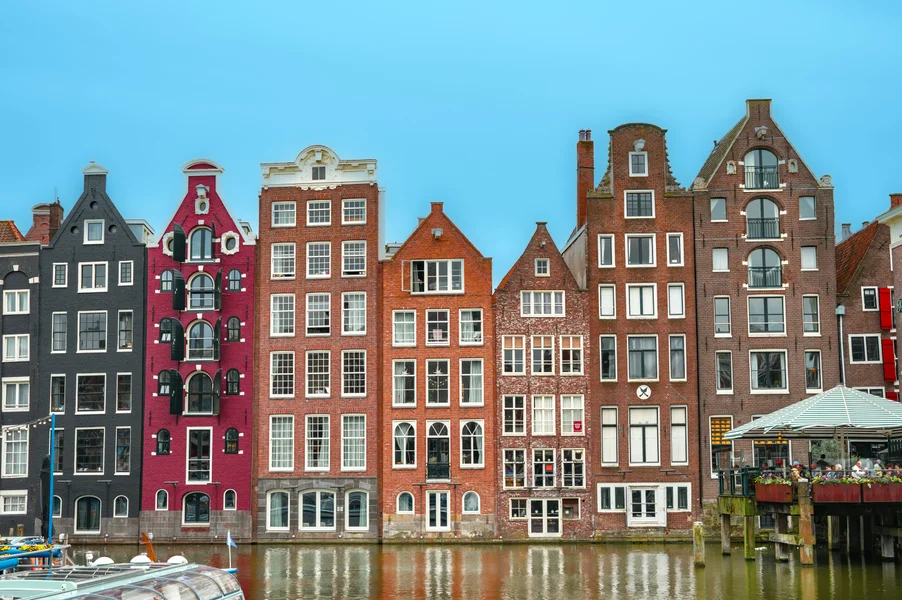
Many traditional Amsterdam canal houses feature incredibly steep and narrow staircases. If you are traveling with heavy luggage or have limited mobility, verify whether your hotel or apartment has an elevator, as many historic buildings do not.
Ad: As a Booking.com partner, we may earn a commission from your booking.
Things to Do
The Museum District

Home to the Van Gogh Museum, the Rijksmuseum, and the Stedelijk, this area is a paradise for art lovers. The Rijksmuseum alone houses masterpieces by Rembrandt and Vermeer. Note that the Van Gogh Museum and Rijksmuseum both require pre-booked timed entry - see Book Ahead below.
Canal Exploration

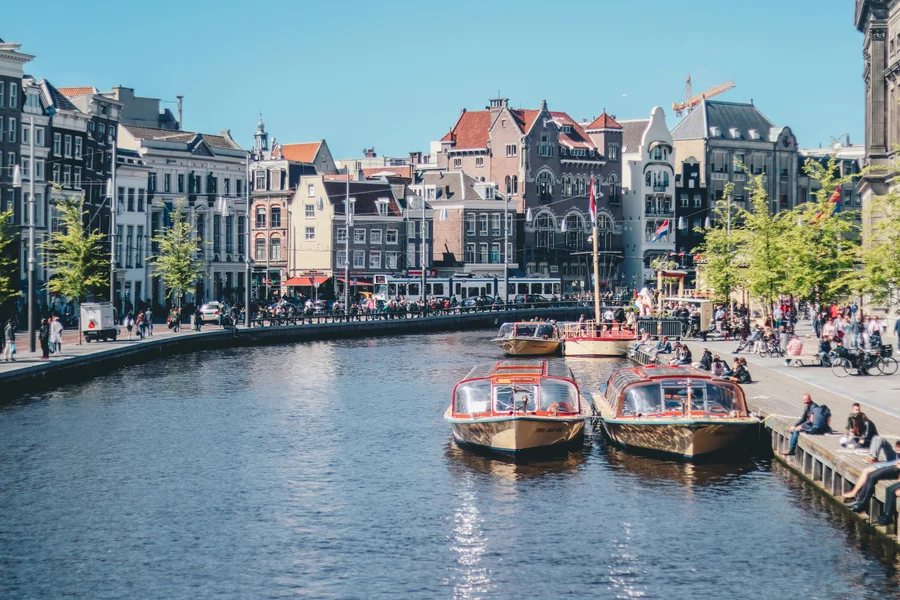
The best way to see Amsterdam is from the water. A canal cruise provides a unique perspective on the 17th-century architecture, but renting a small electric boat or even a pedal boat is a great alternative for a more self-directed experience.
Markets & Neighbourhoods
Waterlooplein Flea Market (open daily except Sunday) is the oldest market in Amsterdam - a proper flea market with vintage clothes, antiques, and secondhand finds. The Jordaan district hosts the Noordermarkt every Saturday morning: a mix of organic food, vintage goods, and secondhand books. For food, the Foodhallen in Oud-West is a covered market with 20+ kitchens - a reliable spot for lunch or an early dinner without a reservation.
Ad: As a GetYourGuide partner, we may earn a commission from your booking.
Book Ahead
Lead times vary significantly by season. The table shows how far ahead to book based on your travel date — peak season attracts much larger crowds and tickets sell out weeks earlier.
Peak and Off-peak season times:
King's Day (27 April) and summer school holidays drive the biggest spikes. The Anne Frank House sells out fastest of any attraction in the city.

Tickets are sold online only. Slots are released every Tuesday at 10:00 AM Amsterdam time for the week 6 weeks later. They sell out within minutes during peak season. The I amsterdam City Card is not accepted.

Timed-entry ticket must be booked online. The I amsterdam City Card is not accepted.
Entrance (€21/adult) includes boat tour and museum mills - book online to guarantee entry.
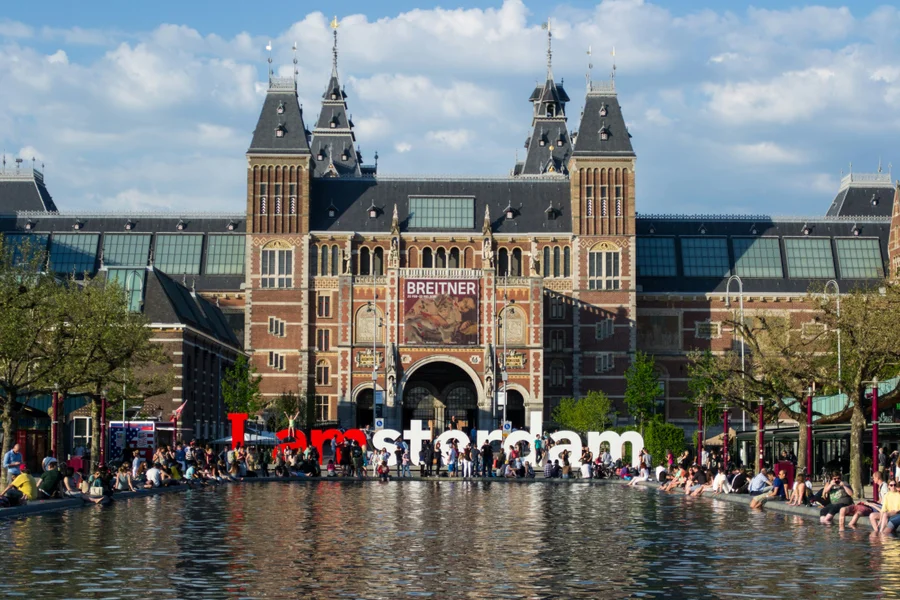
A pre-booked timed slot is required. Weekend slots and special exhibitions fill fastest. Same-day online booking is possible outside peak season.
Timed entry required. The weeks around King's Day (27 April) sell out months in advance. Buy a combo bus + entry ticket from Amsterdam RAI to simplify transport.
Day Trips
Two destinations outside Amsterdam worth the extra travel time. Both Keukenhof and Kinderdijk require advance booking - see the Book Ahead section above for lead times and links.
Keukenhof - Tulip Gardens (Seasonal)

The largest flower garden in the world, with 7 million bulbs across 32 hectares. Open every year from late March to mid-May only.
Getting there: Take any NS train from Amsterdam Centraal to Leiden Centraal (~35 min), then Bus 858 direct to Keukenhof (~30 min). A combined bus and entry ticket from Amsterdam RAI is the easiest option at around €38.50 per adult.
Duration: 3-4 hours on-site.
Keukenhof shuts for the year in mid-May (10 May in 2026, 9 May in 2027). If your trip overlaps with the open season, book tickets as soon as dates are confirmed - the weeks around King’s Day (27 April) sell out months in advance.
Kinderdijk Windmills

A UNESCO World Heritage site with 19 18th-century windmills still standing in a polder landscape south of Rotterdam.
Getting there: Amsterdam Centraal → Rotterdam Centraal by NS train (~40 min, €20.20 one-way second class). From Rotterdam, take the WaterShuttle from Willemskade to Kinderdijk (~30 min). The boat arrival is the best way to approach the site.
Check the WaterShuttle schedule at watershuttle.nl before you go - it runs on fixed departures.
Duration: 3-4 hours on-site; plan a full day from Amsterdam.
The windmill site gets busiest between 11:00 and 14:00. Aim to be at Rotterdam Willemskade for the 09:00 or 09:30 departure to have the dyke paths mostly to yourself for the first hour.
Money & Shops
Amsterdam is effectively cashless in 2026. Major supermarkets and most restaurants accept credit and debit cards. Some small independent shops and market stalls are cash only.
Cards & Cash
Major supermarkets like Albert Heijn and Jumbo accept all major credit cards. Some independent cafes and market stalls are “pin only” (Dutch debit card or contactless) or cash only - look for signs on the door before you order.
When the card terminal asks “Pay in GBP / USD?” - always choose EUR. Dynamic Currency Conversion adds 5-10% on top of your bank’s rate.
ATMs
Geldmaat (yellow) machines are the official bank-consortium ATMs with the lowest fees. Avoid standalone grey ATMs near Damrak and Centraal - these often charge €4-6 per withdrawal on top of your bank’s fee.
Shopping Hours
Standard hours are 09:00-18:00 Monday to Saturday. City-center shops typically stay open late on Thursdays (koopavond) until 21:00. Sunday hours in the center are 12:00-17:00 or 12:00-18:00.
Pit Stops
Restrooms
Public toilets are rare and often cost €0.50-€1.00 (contactless tap). Your best free options are the OBA Public Library near Centraal (ground floor, no purchase needed) and the Rijksmuseum garden-level facilities (accessible without a museum ticket). De Bijenkorf department store has clean facilities on the top floor.
Water
Amsterdam tap water is safe and excellent. The Drinkwaterkaart website locates public refill points citywide. Look for “Kraanwater” fountains in Vondelpark and the Jordaan.
Rest Spots
Vondelpark (south of Leidseplein) is free, open 24/7, and has benches, grass, and a terrace cafe at the Blauwe Theehuis. The GVB ferries behind Centraal Station to Amsterdam Noord run every 5-7 minutes and are completely free for pedestrians and cyclists - an unexpected 15-minute break that also gets you off the tourist grid.
Local Ways
Dining Hours
The Dutch eat dinner early - typically 18:00-20:00 - and many kitchens in smaller restaurants close at 21:30 even on weekends. Lunch runs 12:00-14:00.
Tipping & Etiquette
Service charge (servicekosten) is already included in Dutch menu prices since the 1970s, so you are not expected to tip on top. For excellent service, 5-10% is appreciated; for average service, rounding up the bill is fine. At bars, round up the tab at the end of the night. Taxi drivers do not expect a tip.
Do not take photos of workers in the Red Light District. It is widely considered disrespectful and security staff will intervene.
Tipping in the Netherlands - Dutch ReviewRestaurant Tips
For busy spots on Friday and Saturday, book 2-3 days out via TheFork or Formitable. Seated at an outside table with no staff approaching? That is normal - choose a table and wait; staff will come to you.
You’ll hear the word ‘gezellig’ everywhere. It describes a vibe that is cozy, social, and inviting. If a local tells you a bar is ‘gezellig’, cancel your other plans and go.
Health & Help
Pharmacies
Look for the Apotheek sign (green cross) for prescriptions and prescription refills. For toiletries and non-prescription pain relief (ibuprofen, antihistamines), a Drogisterij (Kruidvat, Etos) is cheaper and more convenient.
For after-hours prescriptions, Apotheek OLVG at OLVG Oost Hospital (Oosterpark 9, East Amsterdam) is the primary 24/7 emergency pharmacy for the city.
Hospitals
OLVG Oost (Oosterpark 9) and OLVG West (Jan Tooropstraat 164) are the main central hospitals with 24/7 A&E departments. EU visitors with an EHIC card receive the same treatment as Dutch nationals. All other visitors should carry comprehensive travel insurance.
Avoid “Tourist Doctor” services near the city center - they charge a large premium for basic consultations.
In the event of an emergency anywhere in the Netherlands, dial 112. For non-emergency police matters, call 0900-8844.
Safety & Accessibility
The Netherlands is rated Level 1 (Exercise Normal Precautions) by the US State Department.
Netherlands Travel Advisory - US State DepartmentSafety Risks
- Pickpocketing near Damrak, Leidseplein, and the Red Light District. Keep your bag in front of you on crowded trams and at Amsterdam Centraal.
- Thieves often work in pairs: one distracts you (asking for directions), the other takes your bag. Be alert in busy tourist areas.
- Coffee shop surroundings attract petty crime. Keep valuables secured.
If you rent a bike, always use two locks: the frame lock and the chain lock. Chain the bike to a fixed rack. Unlocked bikes disappear within minutes in the city center.
Accessibility
Amsterdam’s historic center is challenging: high kerbs, narrow pavements, and uneven cobblestones. Most museums and modern buildings are accessible; many canal houses are not.
- Ongehinderd: English-language accessibility guide for shops, museums, and restaurants across the Netherlands.
- Access Amsterdam: Official city portal with barrier-free route maps.